

A great sun protection hat is one of the simplest ways to shield your face, ears, and neck from harmful ultraviolet radiation every single day. Whether you are walking the dog, running errands, or spending a long afternoon outdoors, the right hat works alongside your sunscreen to dramatically reduce UV exposure. In this guide we break down what makes a hat truly protective, compare popular styles side by side, and explain how to pair your hat with a science-backed sunscreen routine for complete coverage.
Why Sun Protection Hats Matter More Than You Think
Skin cancer is the most commonly diagnosed cancer in the United States, and roughly 90 percent of nonmelanoma skin cancers are linked to UV exposure. A significant share of those cancers appear on the head and neck, areas a hat is uniquely positioned to protect.
A 2018 study published in Photodermatology, Photoimmunology & Photomedicine confirmed that wide-brimmed hats provided the most facial protection during cloudless summer days. No hat blocked 100 percent of rays from every angle, which is exactly why pairing a hat with broad-spectrum sunscreen matters.
Understanding UPF Ratings
UPF (Ultraviolet Protection Factor) is a measure of how much UV radiation a fabric allows to reach your skin. A UPF 50 fabric blocks about 98 percent of UV rays, while UPF 30 blocks roughly 96.7 percent. SPF, by contrast, measures only UVB protection on bare skin and relates to the time until reddening occurs.
What the Skin Cancer Foundation Recommends
The Skin Cancer Foundation recommends hats with a minimum 3-inch brim all around and fabric rated UPF 50 or higher. To earn the Foundation's Seal of Recommendation, adult hats must meet both the brim-width and UPF requirements and pass AATCC testing protocols.
UPF vs. SPF at a Glance
| Metric | Measures | Applies To | Recommended Minimum |
|---|---|---|---|
| UPF | UVA + UVB blocked by fabric | Clothing & hats | 50+ |
| SPF | UVB delay on bare skin | Sunscreen | 30+ daily / 50+ active |
Everyday Hat Styles Compared
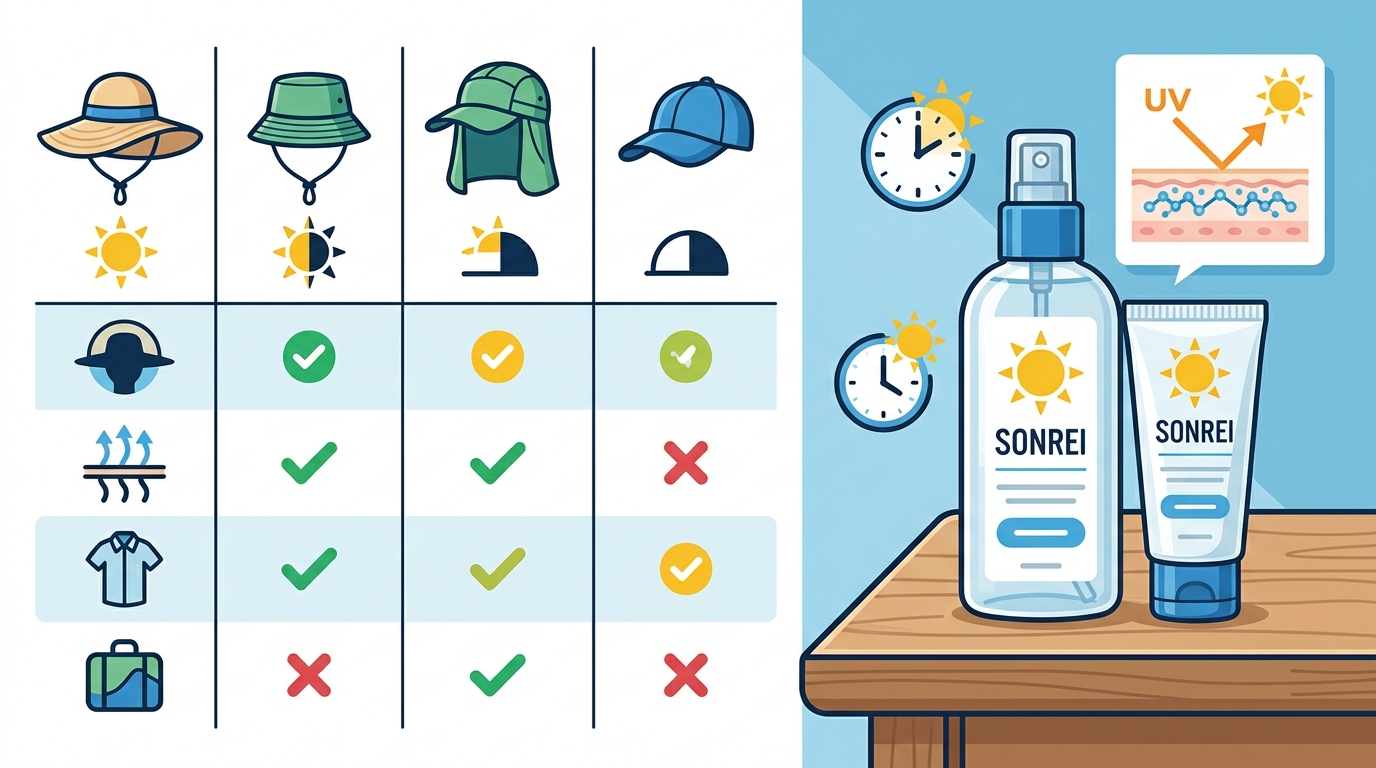
Not every hat suits every occasion. Below is a comparison of the most common styles you will encounter when shopping for everyday sun protection.
| Style | Typical Brim | Best For | UPF Range | Packable? |
|---|---|---|---|---|
| Wide-brim sun hat | 3.5–6 in. | Beach, garden, all-day outdoor events | 50+ | Often yes |
| Bucket hat | 2–3 in. | Casual city wear, travel | 30–50+ | Yes |
| Safari / booney hat | 3–4 in. | Hiking, fishing, yard work | 40–50+ | Yes |
| Performance cap with cape | 3 in. bill + cape | Running, water sports | 40–50+ | Yes |
| Straw lifeguard hat | 4–5 in. | Beach, poolside lounging | 50+ | No |
Wide-brim sun hats offer roughly 60 to 70 percent more UV coverage than standard bucket hats. If maximum protection is the priority, a wide brim with tightly woven, UPF-rated fabric is your best bet. For quick errands or commuting, a UPF bucket hat paired with sunscreen provides a practical balance of style and safety.
What to Look for in a Sun Protection Hat
Brim Width and Coverage
A brim of at least 3 inches shades the face, ears, neck, and upper back. Narrower brims leave the ears and jawline exposed, so aim for the widest brim you will comfortably wear every day.
Fabric and Construction
Tightly woven fabrics such as canvas, nylon, and polyester block more UV than loosely woven materials. Darker or brighter colors absorb UV rather than transmitting it. Look for UPF certification rather than assuming any fabric will protect you.
Fit, Ventilation, and Adjustability
A hat that blows off in a light breeze will not protect you. Choose hats with adjustable chin straps or internal drawcords. Mesh ventilation panels and moisture-wicking sweatbands keep things comfortable during warm weather so you actually keep the hat on all day.
Pairing Your Hat with the Right Sunscreen
Even the best hat only protects the skin it covers. UV rays bounce off water, sand, and pavement, hitting your face from below the brim. That reflected UV is why dermatologists recommend applying broad-spectrum sunscreen to your face and neck even when wearing a sun hat.
For a lightweight formula that layers invisibly under any hat, explore the Clear Sunscreen Collection from Sonrei. These transparent gels work on all skin tones without leaving a white cast, so they pair perfectly with everyday hat wear.
If you prefer a mineral option, the Mineral Sunscreen Collection delivers broad-spectrum SPF 35 with a clean, reef-conscious formula. Heading outdoors with the kids? The Kids Sunscreen lineup keeps little ones protected at the playground or pool.
Sonrei also offers its own AquaGuard UPF Performance Hat Collection in Sand, Gray, Black, and White, making it easy to bundle hat and sunscreen into one sun-safe routine.
Hat Care Tips for Lasting UV Protection
A hat's protective ability can degrade over time if you do not care for it properly. Hand wash in cold water with mild detergent. Avoid bleach and fabric softeners, which break down UV-blocking treatments. Air dry in the shade and reshape the brim while damp.
Studies show that UPF performance decreases when fabric is wet, so let your hat dry completely before relying on it for extended exposure. Keep a backup sunscreen, like the Sonrei best sellers, in your bag for reapplication every two hours.
Key Takeaways
- The Skin Cancer Foundation recommends hats with a minimum 3-inch brim and UPF 50+ fabric.
- UPF measures both UVA and UVB blockage in fabric, while SPF measures only UVB delay on bare skin.
- Wide-brim hats provide the most coverage, but a UPF bucket hat is a practical everyday alternative.
- Tightly woven, darker fabrics block more UV than loose weaves or light colors.
- Always apply broad-spectrum sunscreen under your hat because reflected UV still reaches your face.
- Wet fabric offers less UV protection, so let your hat dry fully before extended outdoor use.
- Combine a UPF hat with transparent sunscreen for complete, comfortable daily protection.
Frequently Asked Questions
What is UPF and how does it differ from SPF?
UPF is the Ultraviolet Protection Factor assigned to fabrics. It measures how much UVA and UVB radiation passes through the material. SPF (Sun Protection Factor) applies to sunscreen and indicates how long UVB rays take to redden protected skin compared to unprotected skin.
How wide should the brim of a sun hat be?
The Skin Cancer Foundation recommends a brim of at least 3 inches all the way around. Wider brims provide more shade to the face, ears, neck, and shoulders.
Can I skip sunscreen if I wear a UPF hat?
No. A hat only protects the skin it covers. UV rays reflect off surfaces like sand, water, and concrete, reaching areas under the brim. Apply broad-spectrum SPF 30+ sunscreen to all exposed skin and reapply every two hours.
Are bucket hats good enough for sun protection?
A UPF-rated bucket hat with a 2.5 to 3-inch brim offers moderate protection for casual outings. For extended sun exposure, a wide-brim hat with at least a 3-inch brim is a better choice.
What fabrics offer the best UV protection in hats?
Tightly woven fabrics like canvas, polyester, and nylon block more UV than loosely woven materials. Fabrics with a certified UPF 50+ rating block at least 98 percent of UV radiation.
Do dark-colored hats protect better than light ones?
Generally yes. Darker and brighter colors absorb UV radiation rather than allowing it to pass through the fabric. However, a UPF-certified light-colored hat can still offer excellent protection if the weave is tight enough.
How do I care for my UPF hat so it keeps working?
Hand wash with cold water and mild detergent. Skip bleach and fabric softeners. Air dry in the shade and reshape the brim while the hat is still slightly damp.
Does Sonrei sell sun protection hats?
Yes. Sonrei offers the AquaGuard UPF Performance Hat Collection in multiple colors, designed to complement its award-winning sunscreen lineup for full-spectrum daily protection.
Build Your Complete Sun Protection Routine
A UPF hat and a transparent, science-backed sunscreen are the foundation of real everyday sun safety. Browse the full Sonrei collection to find your perfect hat-and-sunscreen pairing, and take the guesswork out of UV protection for good.