

A great sun protection hat does more than shade your eyes. It acts as a physical barrier against ultraviolet radiation, shielding your face, ears, neck, and scalp from cumulative UV damage that sunscreen alone can miss. Whether you are walking the dog, running errands, or spending a full afternoon outdoors, the right hat paired with a high-performance sunscreen creates a layered defense that dermatologists consistently recommend. Below, you will find the hat styles, features, and selection criteria that matter most for daily protection.
Why Sun Protection Hats Matter Every Day
Skin cancer is the most common cancer in the United States. According to the Skin Cancer Foundation, 1 in 5 Americans will develop skin cancer by age 70, and over 90% of nonmelanoma skin cancers appear on sun-exposed areas like the head, face, neck, and ears.
A hat addresses these vulnerable zones directly. Unlike sunscreen, which must be reapplied every two hours and is often applied unevenly, a UPF-rated hat provides consistent protection the entire time it is on your head. There are no missed spots on the scalp, ears, or hairline.
UPF Ratings Explained: What to Look For
UPF is Ultraviolet Protection Factor, a rating system that measures how effectively a fabric shields skin from both UVA and UVB radiation. A UPF 50+ fabric transmits only 1/50th (2%) of UV radiation, which the Skin Cancer Foundation rates as "excellent" protection.
SPF is Sun Protection Factor, the rating used for topical sunscreens. A key difference: SPF measures only UVB protection, while UPF accounts for both UVA and UVB rays. This makes UPF-rated hats a broader-spectrum physical shield.
UPF Tiers at a Glance
A UPF 15-24 rating offers "good" protection. UPF 25-39 is considered "very good," and UPF 40-50+ earns an "excellent" classification. Dermatologists consistently recommend UPF 50+ for daily and extended outdoor use.
Best Hat Styles for Everyday Sun Protection
Wide-Brim Hats
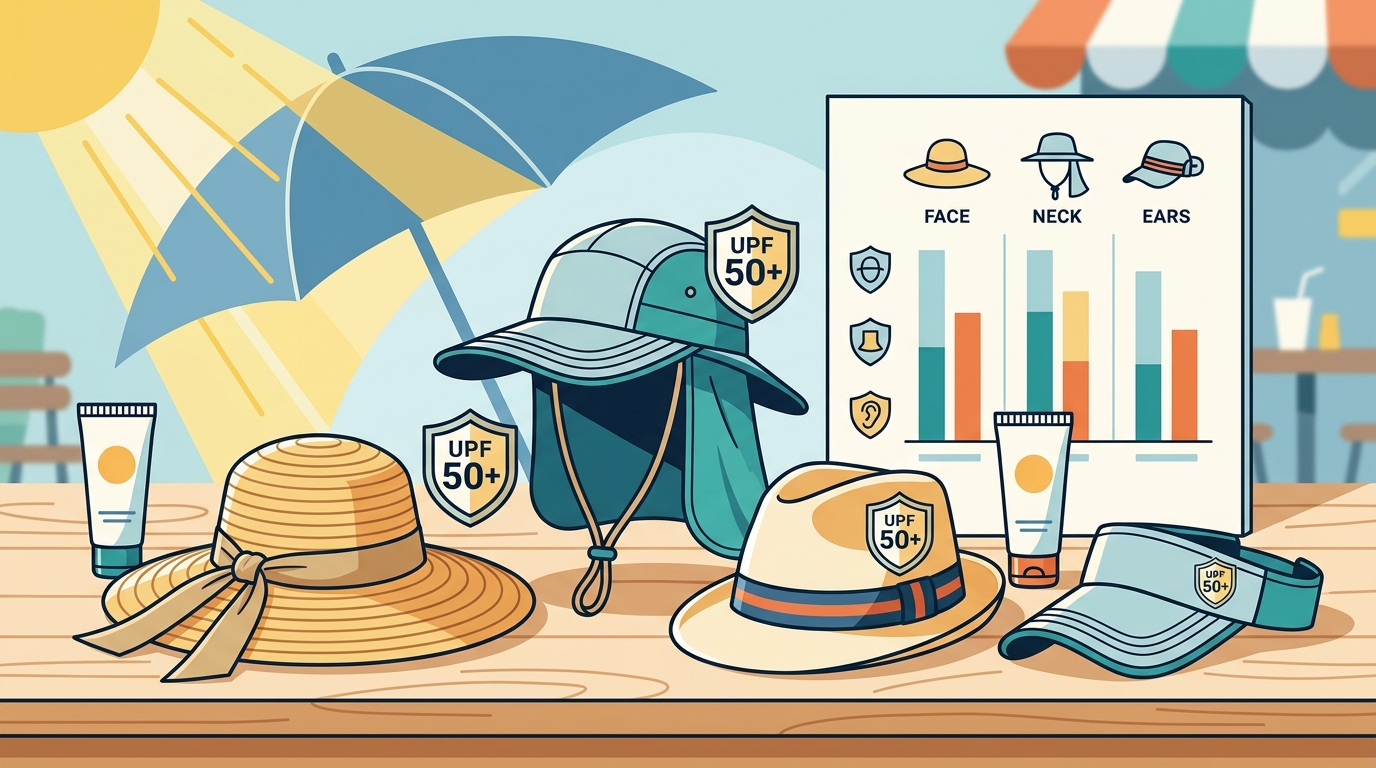
Wide-brim hats with a brim of at least three inches shade the face, neck, and shoulders simultaneously. They are the gold standard recommended by dermatologists for maximum coverage. Look for options in tightly woven synthetic or natural fibers rated UPF 50+.
Performance Caps with Neck Capes
A performance cap with a removable neck cape, like the Outdoor Research Sun Runner Cap, offers flexibility. You get a street-friendly baseball cap silhouette when the cape is stowed and full head-and-neck coverage when conditions demand it. Sonrei's own Aquaguard UPF Hat Collection combines this versatility with water-ready performance.
Bucket Hats
Bucket hats offer 360-degree brim coverage in a compact, packable profile. Modern UPF-rated bucket hats use moisture-wicking fabrics and mesh ventilation panels, making them comfortable for commutes, gardening, and casual outings alike.
Key Features to Evaluate Before You Buy
Brim width: A minimum of three inches is needed to protect the face, ears, and neck. Wider is better for extended exposure.
Fabric density: Hold the hat up to sunlight. If light passes through easily, UV rays will too. Dense weaves and synthetic UPF-treated fabrics outperform loosely woven straw.
Ventilation: Mesh panels and moisture-wicking sweatbands prevent overheating. A hat you take off because it is too hot is a hat that is not protecting you.
Adjustability and fit: Drawstrings, toggles, and chin straps ensure the hat stays put in wind. A secure fit also prevents the brim from shifting and exposing skin.
Packability: Crushable and foldable designs travel well without losing their shape, so you are more likely to bring them along.
Hats Plus Sunscreen: The Layered Approach
Dermatologists recommend combining UPF 50+ clothing and hats for covered areas with broad-spectrum SPF 30+ sunscreen for exposed skin. A hat alone does not protect your chin, lower cheeks, or the front of your neck from reflected UV rays bouncing off pavement, water, and sand. Up to 80% of UV rays can penetrate clouds, so this layered approach matters even on overcast days.
For exposed skin, a transparent, weightless sunscreen like the Sonrei Clear Sunscreen Collection works seamlessly under any hat. Formulated for all skin tones and free of octinoxate and oxybenzone, these formulas complement your hat without leaving a white cast. Explore the science behind the formulations on the Organoshield Technology page.
Hat Style Comparison Table
| Hat Style | Typical Brim Width | Best For | UPF Range | Packable? |
|---|---|---|---|---|
| Wide-Brim | 3-6 inches | Beach, gardening, all-day outdoor events | UPF 30-50+ | Varies |
| Performance Cap + Cape | 2.5-3 inches (+ cape) | Hiking, running, commuting | UPF 40-50+ | Yes |
| Bucket Hat | 2-3.5 inches | Casual outings, travel, errands | UPF 30-50+ | Yes |
| Fedora / Panama | 2.5-4 inches | Urban wear, brunch, travel | UPF 15-50+ | Some |
| Baseball Cap (no cape) | 2.5-3 inches | Quick errands only | UPF 5-25 | Yes |
Note: A standard baseball cap leaves the ears, neck, and cheeks exposed. Dermatologists routinely advise against relying on them as your sole sun protection.
Key Takeaways
- Choose a hat rated UPF 50+ with a brim of at least three inches for meaningful everyday sun protection.
- UPF measures both UVA and UVB blockage, making it a more comprehensive standard than SPF for fabrics.
- Wide-brim, bucket, and performance cap styles each serve different lifestyles; pick the one you will actually wear daily.
- Pair your hat with a broad-spectrum sunscreen on exposed skin for full layered defense.
- Look for ventilation, adjustability, and packability so the hat stays comfortable and travels with you.
- Reflected UV from water, pavement, and sand can still reach skin under a hat brim, reinforcing the need for sunscreen on the face and neck.
- Sonrei's Aquaguard UPF Hats and clear sunscreen formulas are designed to work together for complete coverage.
Frequently Asked Questions
What is the best UPF rating for a sun hat?
UPF 50+ is the highest standard available and is widely recommended by dermatologists. It blocks at least 98% of both UVA and UVB radiation, which the Skin Cancer Foundation classifies as "excellent" protection.
Can I skip sunscreen if I wear a UPF hat?
No. A hat protects the areas it covers, but your face, chin, and neck still receive reflected UV from surfaces like water and pavement. Dermatologists recommend applying broad-spectrum SPF 30+ sunscreen to all exposed skin in addition to wearing a hat.
Do I need a sun hat on cloudy days?
Yes. Up to 80% of UV rays penetrate cloud cover, and UV also reflects off pavement and other surfaces. Wearing a UPF hat on overcast days is a smart habit.
What brim width do dermatologists recommend?
A minimum of three inches. This width shades the face, ears, neck, and upper shoulders. Wider brims provide even more coverage for extended outdoor activities.
How do I know if my current hat offers UV protection?
Hold the hat up to sunlight. If you can see light through the fabric, UV rays are getting through too. For verified protection, look for a labeled UPF rating or the Skin Cancer Foundation Seal of Recommendation.
Are baseball caps good enough for sun protection?
Standard baseball caps typically offer only UPF 5-7 and leave the ears and neck completely exposed. Dermatologists advise choosing a wide-brim or cape-style hat for meaningful protection.
How should I care for my UPF hat?
Hand wash in cold water with mild detergent. Avoid bleach and tumble drying, which can degrade the UPF treatment. Air dry in the shade and reshape as needed.
What is the difference between UPF and SPF?
UPF is the UV protection rating for fabrics and measures both UVA and UVB blockage. SPF is the rating for topical sunscreens and traditionally measures only UVB protection unless labeled "broad spectrum."
Build Your Complete Sun Defense
The best sun protection strategy combines a UPF 50+ hat with a high-quality sunscreen on every inch of exposed skin. Browse the Sonrei Aquaguard UPF Hat Collection and pair it with an award-winning clear sunscreen that works beautifully on all skin tones. Your skin will thank you.