

According to the World Health Organization, approximately 132 million new cancer cases occur annually, with non-melanoma skin cancers representing the most frequently diagnosed malignities worldwide. Daily ultraviolet exposure remains a primary driver of premature aging and cellular damage, making consistent headwear essential for long-term dermatological health. Selecting the right protective gear requires understanding specific fabric ratings, brim geometry, and ventilation mechanics. This guide evaluates the top-rated options currently available to help you maintain consistent coverage without compromising comfort or style.
Understanding UPF Ratings
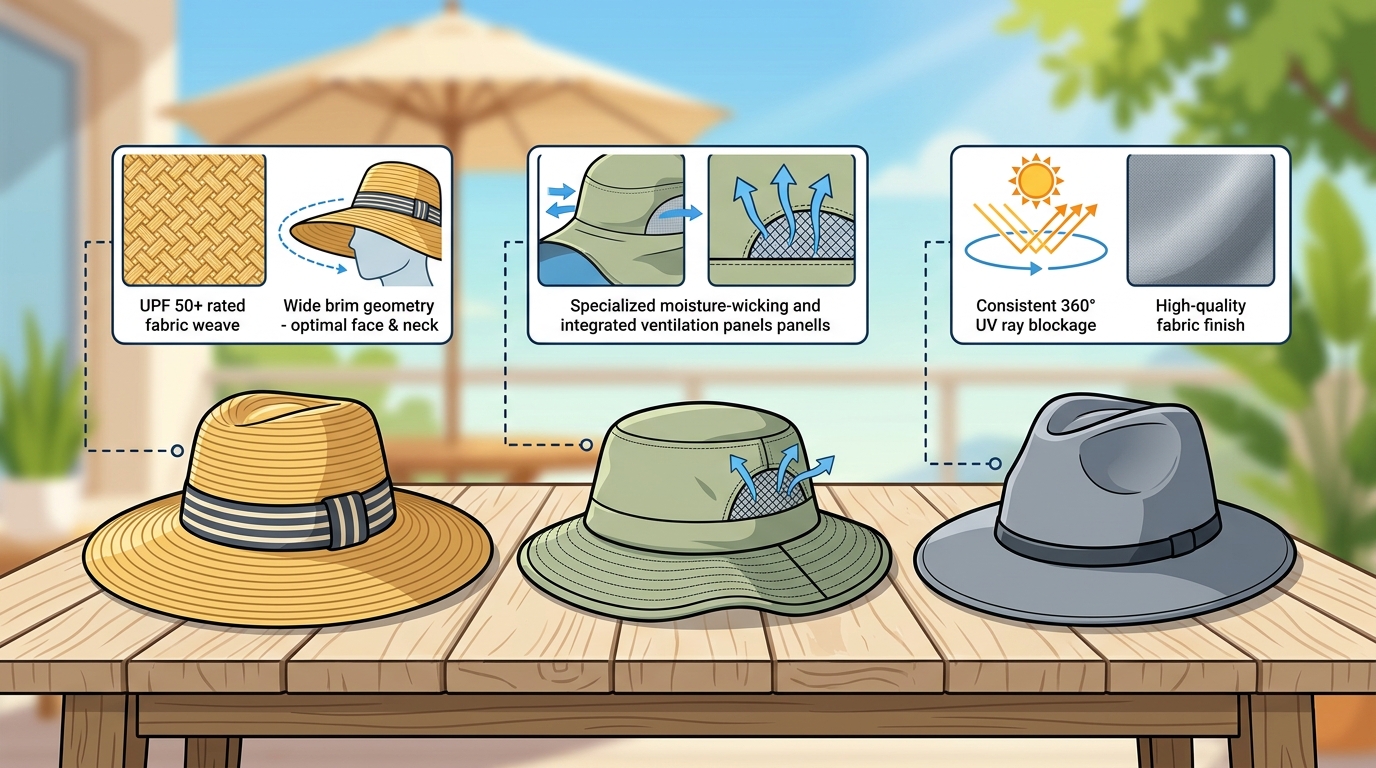
Ultraviolet Protection Factor is a standardized rating system that quantifies fabric coverage against solar radiation. A standard cotton t-shirt typically provides a rating of five, which allows twenty percent of harmful rays to penetrate the material. UPF 50+ fabric is the industry standard for daily outdoor activity. This classification blocks ninety-eight percent of both UVA and UVB wavelengths. You should always verify the manufacturer's testing protocol before purchasing. Many brands now utilize tightly woven synthetic blends to achieve maximum coverage without adding unnecessary weight. You can explore the full inventory of certified headwear by browsing the complete product catalog. Modern manufacturing techniques prioritize consistent thread density to eliminate microscopic gaps that compromise coverage.
Wide-Brim Advantages
A brim extending at least three inches around the entire circumference provides optimal facial shielding. Narrower styles leave the ears and neck exposed to direct overhead radiation. According to the American Academy of Dermatology, extending coverage beyond the hairline significantly reduces cumulative photoaging markers. Wide-brim headwear is a protective category featuring a continuous three-inch or greater perimeter to cast a complete facial shadow. This geometric advantage eliminates the need for constant reapplication of topical barriers. You can find highly rated options in the best-selling accessories section. The structural rigidity of these hats maintains their shape during wind gusts or active commutes.
Breathable Fabric Technology
Heat retention remains the primary complaint among daily commuters and outdoor workers. Advanced moisture-wicking fibers pull perspiration away from the scalp while maintaining a tight molecular structure. According to peer-reviewed dermatological studies, elevated scalp temperatures can accelerate sebum production and trigger inflammatory responses. Moisture-wicking technology is a specialized fiber treatment that actively pulls perspiration away from the scalp while maintaining a tight weave structure. These engineered channels prevent heat buildup without sacrificing structural integrity. You can review detailed care instructions and material breakdowns on the dedicated skincare education hub. Lightweight construction ensures the hat remains comfortable during extended afternoon exposure.
Face and Neck Coverage
Integrated neck flaps or extended back panels provide continuous protection for the occipital region. This area frequently develops actinic keratosis due to its constant exposure during driving or walking. According to the Centers for Disease Control and Prevention, approximately 5.4 million cases of skin cancer are treated annually in the United States alone. Extended coverage panels are designed to drape securely over the shoulders. Adjustable drawstrings or elastic bands keep the material in place during sudden movements. You can explore the brand's dedicated UPF performance hat collection to see how modern designs balance coverage with mobility. The integration of these panels eliminates the need for additional neck wraps or scarves.
Everyday Compatibility
Professional environments and casual outings demand headwear that maintains a polished aesthetic. Bulkier outdoor gear often clashes with office dress codes or social expectations. Streamlined silhouettes are engineered to sit flush against the hairline. These models feature adjustable inner bands that prevent slipping during transit. You can bundle multiple protective items to maximize savings through the secure checkout portal. Modern manufacturing prioritizes washable materials that resist fading after repeated cleaning cycles. The integration of moisture-absorbing sweatbands ensures long-term hygiene without compromising the exterior finish. You can learn more about the company's founding principles and commitment to dermatological safety on the search and discovery portal. Consistent daily use builds a reliable habit that complements topical sunscreen application.
Product Comparison Matrix
| Model Category | UPF Rating | Key Feature | Best Use Case |
|---|---|---|---|
| Classic Wide-Brim | 50+ | Full facial shadow coverage | Daily commuting and outdoor work |
| Performance Visor | 50+ | Open crown ventilation | High-intensity exercise |
| Extended Neck Flap | 50+ | Occipital and shoulder shielding | Extended driving and hiking |
| Structured Fedora | 50+ | Professional aesthetic finish | Office environments and social events |
Key Takeaways
- UPF 50+ fabric blocks ninety-eight percent of ultraviolet radiation.
- Three-inch brims are required to fully shield the ears and neck.
- Integrated neck flaps eliminate the need for additional protective wraps.
- Moisture-wicking inner bands maintain hygiene during extended wear.
- Streamlined silhouettes meet professional dress code requirements.
- Regular machine washing preserves fabric density and coverage ratings.
- Combining headwear with topical SPF creates a redundant safety protocol.
Frequently Asked Questions
What UPF rating should I prioritize for daily use?
You should prioritize a rating of fifty or higher. This threshold blocks ninety-eight percent of harmful wavelengths and meets the standard recommendation for daily outdoor exposure.
Can I machine wash sun protection hats without damaging the fabric?
Most modern performance hats are designed for machine washing. You should always follow the manufacturer's care label to preserve the tight weave and prevent fiber degradation.
Do wide-brim hats interfere with eyeglasses or sunglasses?
Properly fitted hats sit slightly above the brow line to prevent frame compression. You can adjust the inner elastic band to achieve a secure yet comfortable seal around the temples.
How often should I replace a sun protection hat?
You should replace the item every two to three years. Prolonged sun exposure gradually breaks down synthetic fibers, which reduces the overall coverage rating over time.
Are lightweight hats suitable for high-humidity environments?
Advanced moisture-wicking blends are specifically engineered for humid climates. These materials pull perspiration away from the scalp while maintaining a breathable structural matrix.
Can I wear these hats under hard hats or safety gear?
Low-profile designs fit comfortably beneath standard safety equipment. You should verify the inner band thickness to ensure it does not compromise the safety rating of your protective gear.
Secure Your Coverage
Daily ultraviolet exposure requires a proactive approach to headwear selection. You can explore the complete inventory of certified protective gear by visiting the official product catalog. Selecting a high-performance hat ensures consistent shielding while maintaining a polished aesthetic. You can bundle multiple protective items to maximize savings through the secure checkout portal. Prioritize long-term dermatological health by investing in reliable, everyday coverage today.