

Best Sun Protection Hats for Everyday Wear
Ultraviolet radiation is a primary driver of premature skin aging and cellular damage, affecting millions of people globally every day. According to the Skin Cancer Foundation, approximately 5.4 million cases of skin cancer are treated in the United States each year, highlighting the critical need for consistent protective measures. While sunscreen is a staple in most skincare routines, it often requires frequent reapplication and can be easily missed on the scalp and face. A high-quality sun protection hat serves as a reliable, physical barrier that works continuously without the need for chemical reapplication. This guide explores the most effective hat styles, materials, and features to ensure your daily routine includes robust defense against harmful UV rays.
Why Hats Are Essential for Daily UV Defense
Physical sun protection offers immediate and consistent coverage that chemical sunscreens cannot always match. Sunscreen can degrade with sweat, water exposure, and time, requiring reapplication every two hours for optimal efficacy. A hat with a high Ultraviolet Protection Factor (UPF) rating blocks a specific percentage of UV rays from reaching your skin. For instance, a UPF 50+ fabric blocks 98% of the sun's ultraviolet radiation, allowing only 2% to pass through. This level of protection is vital for individuals who spend significant time outdoors, whether commuting, gardening, or walking the dog.
The scalp and face are particularly vulnerable areas because they are often neglected during sunscreen application. Hair does not provide sufficient coverage against UV rays, especially as it thins with age or due to medical conditions. By wearing a hat, you create a shadow that shields the forehead, ears, and neck from direct exposure. This mechanical barrier reduces the overall burden on your skincare routine, allowing products like Sonrei's award-winning sunscreens to focus on areas the hat cannot cover, such as the cheeks and nose bridge.
Comparing Hat Styles for Everyday Use
Not all hats offer the same level of protection. The brim width, crown depth, and material density determine how much skin is shielded. Below is a comparison of the most effective hat styles for daily wear.
| Hat Style | UV Coverage Area | Best For | Pros | Cons |
|---|---|---|---|---|
| Wide-Brimmed Hat | Face, Ears, Neck | Maximum sun protection | Shields the most skin area | Can be bulky or less stylish |
| Baseball Cap | Forehead, Eyes | Casual daily wear | Lightweight and familiar | Leaves ears and neck exposed |
| Bucket Hat | Face, Neck, Ears | Outdoor activities | 360-degree protection | May slip in wind |
| Legionnaire Hat | Face, Neck, Back of Head | High-exposure environments | Complete coverage including neck | Less common for formal settings |
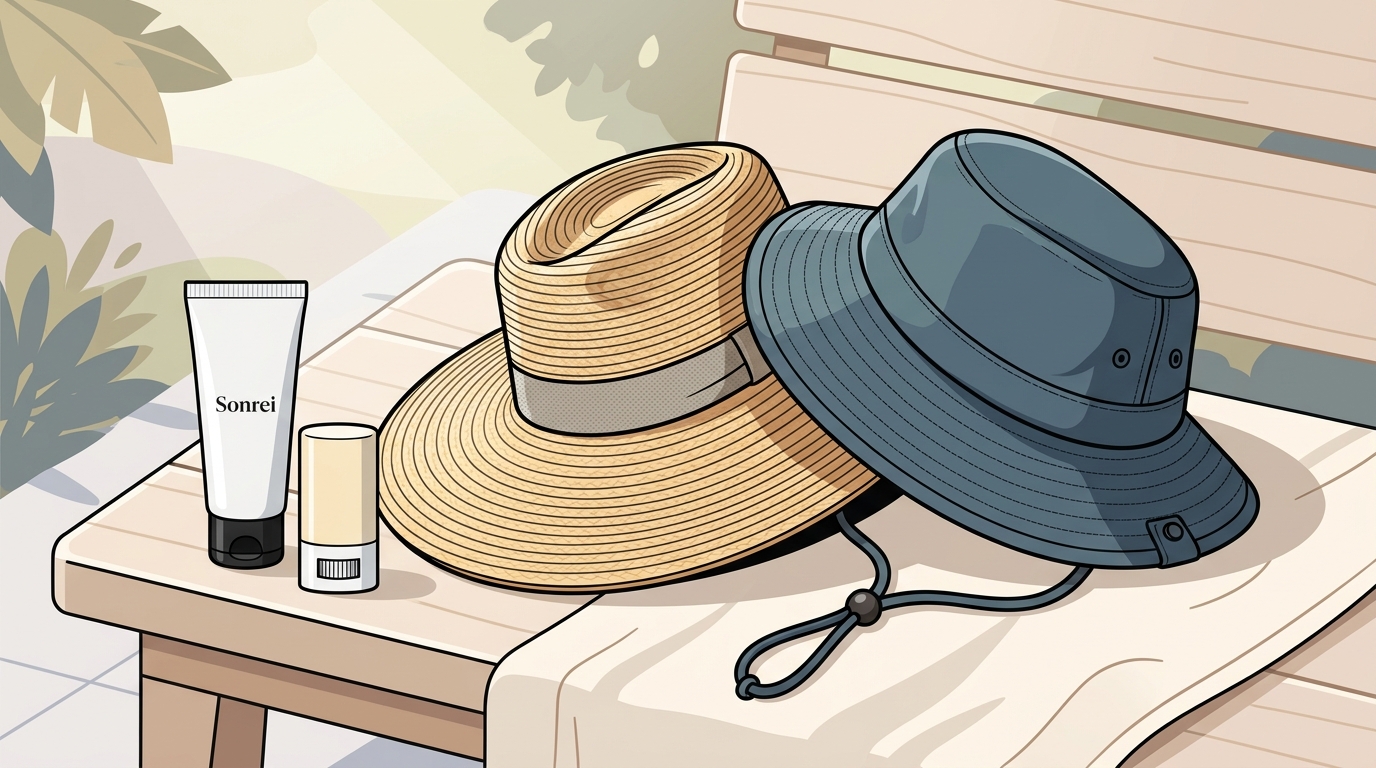
For everyday wear, a wide-brimmed hat or a bucket hat often provides the best balance of protection and style. If you prefer a baseball cap, consider pairing it with a neck drape or wearing a mineral sunscreen on exposed areas. The Sonrei product line includes tinted mineral sunscreens that blend seamlessly under hats, preventing the white cast often associated with zinc oxide products.
Understanding UPF Materials and Weave Density
The fabric of your hat plays a crucial role in its protective capabilities. UPF ratings are determined by the fabric's weave density, color, and treatment. A tight weave blocks more UV rays than a loose weave. Darker colors generally absorb more UV radiation, preventing it from passing through to the skin, while lighter colors may reflect more heat but offer slightly less UV protection unless treated.
Organoshield Technology, utilized by premium brands like Sonrei, involves integrating mineral filters directly into the fabric or formulation to enhance protection. While hats rely on physical barriers, the principle of embedding protection into the material is similar. When selecting a hat, look for labels that explicitly state a UPF rating. If no rating is provided, hold the fabric up to a light source. If you can see light passing through the weave, the protection level is likely lower.
Additionally, consider the fabric's moisture-wicking properties. Synthetic blends like polyester or nylon often offer better durability and UPF stability when wet compared to cotton, which can lose its protective qualities when damp. The American Cancer Society recommends choosing clothing and hats made from tightly woven fabrics for optimal sun safety.
Critical Features for Comfort and Protection
Comfort is a major factor in whether you will consistently wear your sun protection hat. If a hat is too tight, hot, or heavy, you are likely to remove it, leaving your skin vulnerable. Look for hats with the following features:
Ventilation and Breathability
Mesh panels or perforated crowns allow heat to escape, keeping your head cool. This is particularly important for everyday wear in warmer climates. Without proper ventilation, the discomfort of heat can outweigh the benefits of UV protection.
Adjustable Fit
An adjustable strap or chin cord ensures the hat stays in place during wind or activity. A secure fit also prevents gaps that might allow UV rays to reach the neck or ears. Some hats come with elastic bands that provide a snug yet comfortable fit for various head sizes.
Neck Coverage
The back of the neck is a common site for skin cancer because it is often overlooked. Hats with extended back flaps or longer brims provide essential coverage for this area. This feature is especially valuable for individuals with fair skin or a history of skin damage.
Integrating Hats with Sonrei Skincare
While hats provide excellent physical protection, they do not cover every inch of your face. The areas around the eyes, nose, and cheeks still require dedicated sun care. This is where Sonrei's skincare philosophy comes into play. Their products are designed to complement physical barriers by offering lightweight, non-greasy protection that works under makeup and hats.
For instance, the Sea Clearly Hydrating SPF 35+ Gel is formulated to be clear and non-white, making it ideal for use under a hat brim where visible residue would be noticeable. The inclusion of growth factors helps support skin health, addressing the aging effects of UV exposure that may still penetrate or reflect off surfaces.
Similarly, the Clearly Zinq Tinted Mineral Gel offers broad-spectrum protection with a tint that evens out skin tone. This product is particularly useful for those who want the added benefit of light coverage while wearing a hat. By combining a high-UPF hat with Sonrei's advanced sunscreen formulations, you create a multi-layered defense system that maximizes skin safety.
Key Takeaways
- UPF Ratings Matter: Always choose hats with a UPF 50+ rating for maximum UV blockage.
- Brim Width is Critical: A brim of at least 3 inches provides the best coverage for the face and neck.
- Material Density: Tight weaves and darker colors generally offer superior protection compared to loose, light fabrics.
- Comfort Drives Consistency: Breathable, adjustable hats are more likely to be worn daily, ensuring continuous protection.
- Complement with Skincare: Use mineral sunscreens like those from Sonrei on exposed areas to fill the gaps left by hat coverage.
- Reapply Sunscreen: Even with a hat, reapply sunscreen to the face every two hours if you are in direct sunlight for extended periods.
- Protect the Scalp: If you have thinning hair, ensure your hat covers the scalp or use a scalp-specific sunscreen.
Frequently Asked Questions
Do all hats block UV rays?
No, not all hats provide adequate protection. Loose-weave cotton hats or those without a UPF rating may allow significant UV penetration. Always check for a UPF label or test the fabric against light.
How often should I replace my sun protection hat?
Over time, fabrics can stretch, thin, or lose their tight weave due to washing and wear. Inspect your hat regularly for signs of deterioration. If you can see light through the fabric, it is time for a replacement.
Can I wear a hat with a ponytail?
Yes, many modern sun hats feature a ponytail port or adjustable back straps to accommodate different hairstyles. This ensures a secure fit without compromising the hat's protective coverage.
Is UPF 50+ better than SPF 50?
UPF and SPF measure protection differently but offer similar levels of defense at the 50+ rating. UPF measures the fabric's ability to block UV rays, while SPF measures the sunscreen's ability to protect skin. Both are highly effective when used correctly.
What is the best hat for sensitive skin?
Hats made from natural, breathable fibers like organic cotton or bamboo blends are often gentler on sensitive skin. Additionally, choosing hats with minimal chemical treatments reduces the risk of irritation.
How do I clean a UPF hat?
Follow the care label instructions carefully. Most UPF hats can be hand-washed in cold water with mild detergent. Avoid bleach and fabric softeners, as these can degrade the fabric's protective properties.
Do I need a hat if I am wearing sunscreen?
Yes, sunscreen can wear off, and hats provide an additional layer of protection. Using both ensures that you are covered even if the sunscreen is compromised by sweat or water.
Shop Premium Sun Protection
Protecting your skin from daily UV exposure is a vital component of long-term health and beauty. By choosing the right hat and complementing it with high-quality skincare, you can maintain a radiant, healthy complexion. Explore the Sonrei collection to find the perfect sunscreen to pair with your everyday hat. Visit our homepage to learn more about our award-winning formulations and commit to a lifestyle of comprehensive sun care.