

Best Sun Protection Hats for Everyday Wear
Ultraviolet radiation remains the primary driver of premature skin aging and cellular damage, with the American Academy of Dermatology noting that up to 90% of visible skin changes are linked to sun exposure. While daily application of high-SPF products like Sonrei’s award-winning luxury sunscreens is non-negotiable, physical barriers provide an essential layer of defense that chemical filters alone cannot replicate. Selecting the right headwear is not merely a fashion choice but a critical component of a rigorous dermatological routine.
Comparing Hat Styles for Maximum Coverage
The geometry of a hat determines the surface area of skin shielded from direct solar radiation. Not all hats offer equal protection, and understanding the structural differences is vital for everyday wear.
The Wide-Brimmed Fedora
A wide-brimmed hat with a brim measuring at least three inches provides a 360-degree shield. This style protects the ears, the back of the neck, and the sides of the face. According to data from the Skin Cancer Foundation, a wide-brimmed hat can reduce UV exposure to the face by up to 50 percent compared to a baseball cap. This makes it the superior choice for prolonged outdoor activities.
The Baseball Cap
While popular for sports, a standard baseball cap offers limited protection. It shields the forehead and eyes but leaves the ears, cheeks, and neck completely exposed. This creates a "masking effect" where the protected skin remains youthful while the exposed areas age rapidly. For everyday wear, this style is insufficient for comprehensive sun safety.
The Bucket Hat
Bucket hats offer a more relaxed fit with a downward-sloping brim. They provide good coverage for the face and neck but can be less secure in windy conditions. The material density is crucial here, as loose weaves allow significant UV penetration.
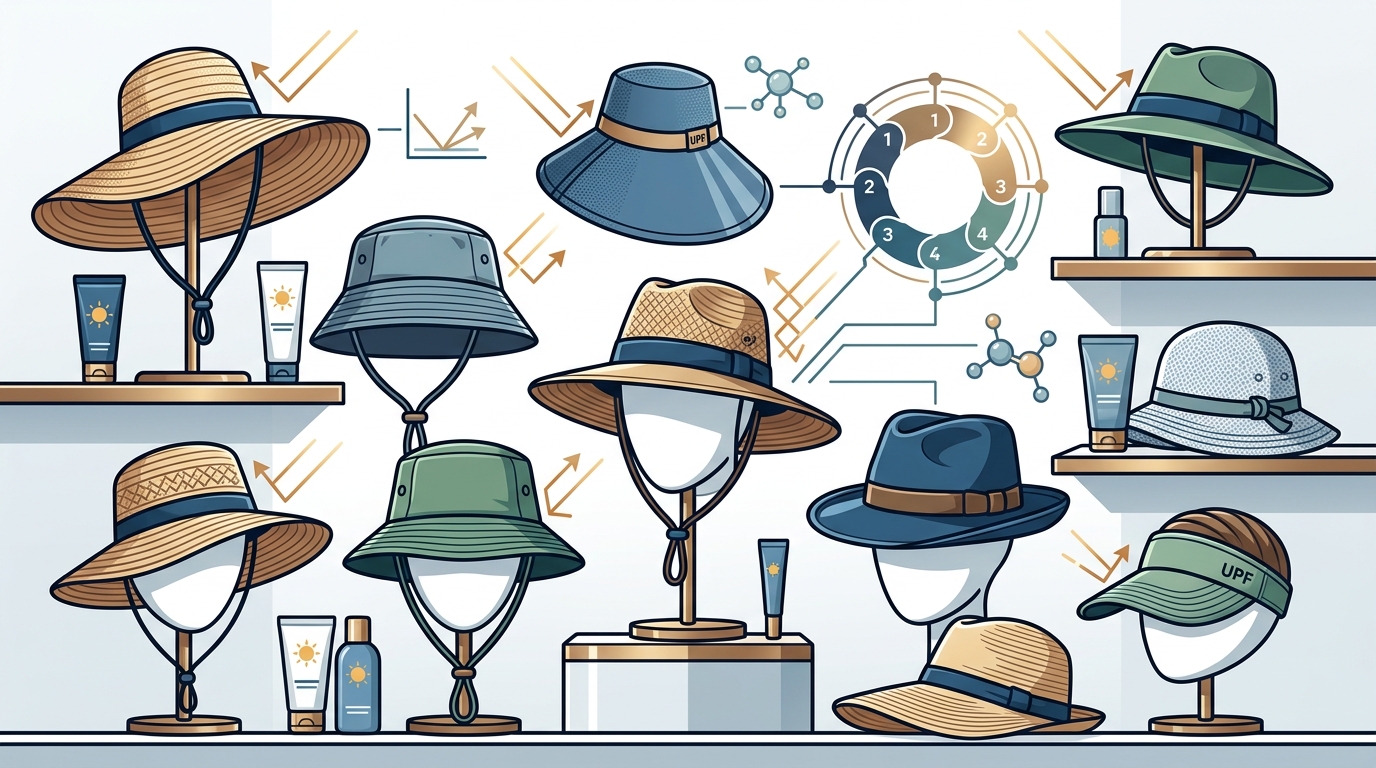
Understanding UPF Fabric Technology
Ultraviolet Protection Factor (UPF) is the rating system used to measure how much solar energy reaches your skin. Unlike SPF, which measures protection against UVB rays for sunscreen, UPF measures the protection of the fabric itself.
What is UPF?
UPF is a rating that indicates the fraction of sunburn-producing UV rays that can pass through the fabric. For example, a UPF 50 fabric allows only 1/50th of the sun's UV radiation to reach the skin. This means it blocks 98 percent of UV rays. A UPF 15 fabric allows 1/15th of the UV radiation to pass through, blocking 93 percent. For maximum protection, a UPF of 50+ is the industry gold standard.
Material Matters
The weave tightness, color, and fiber type dictate the UPF rating. Darker colors generally absorb more UV radiation, preventing it from passing through to the skin. Synthetic fibers like polyester and nylon often offer higher inherent UPF ratings than natural fibers like cotton, which can lose protection when wet. The American Academy of Dermatology recommends choosing hats made from tightly woven fabrics or those specifically treated with UV-inhibiting chemicals.
Protecting the Face and Neck
The face and neck are among the most vulnerable areas for skin cancer and photoaging. The nose, ears, and décolletage receive the most direct sunlight. A hat that does not cover these areas fails its primary purpose.
The Role of the Neck Flap
Many performance-oriented sun hats include a rear neck flap. This extension provides critical coverage for the nape of the neck, an area often neglected during sunscreen application. This feature is particularly important for individuals with fair skin or a history of skin cancer.
Shade and Angle
The effectiveness of a hat depends on the sun's angle. At solar noon, when the sun is directly overhead, a hat with a moderate brim may cast a shadow that does not reach the chin. A wider brim ensures that the shadow remains on the face regardless of the sun's position throughout the day.
Integrating Sunscreen with Headwear
Even with the best hat, gaps in coverage remain. The scalp, the area behind the ears, and the sides of the face are often exposed. Layering sunscreen under and around your hat creates a redundant safety net.
Applying Sunscreen Under Hats
Apply a broad-spectrum sunscreen to all exposed areas before putting on your hat. For the scalp, consider using a spray sunscreen or a dry oil that does not leave a greasy residue. Sonrei’s Sea Clearly SPF 50 Clear Gel Sunscreen is formulated to be lightweight and non-greasy, making it ideal for use under headwear without causing slippage or discomfort.
Reapplication Strategies
Sunscreen degrades over time and with sweat. If you are wearing a hat for extended periods, remove it periodically to reapply sunscreen to the forehead and temples. This is especially important if you are sweating heavily. The Clearly Zinq Mineral Gel Sunscreen offers robust mineral protection that is less likely to irritate the skin upon reapplication.
The Synergy of Protection
Combining physical barriers with chemical or mineral filters maximizes protection. A study published in the Journal of the American Academy of Dermatology highlights that the combination of sunscreen and protective clothing reduces the risk of melanoma more effectively than either method alone. This synergy is the cornerstone of modern dermatological prevention.
Key Takeaways
- Wide Brims are Essential: A brim of at least three inches provides the most comprehensive coverage for the face and neck.
- UPF Rating is Critical: Always choose hats with a UPF of 50+ to ensure 98 percent UV blockage.
- Material Density Matters: Tightly woven synthetic fabrics generally offer better protection than loose cotton weaves.
- Layering is Key: Use high-SPF sunscreen on all exposed areas, even when wearing a hat.
- Reapplication is Necessary: Remove your hat periodically to reapply sunscreen to the forehead and temples.
- Neck Coverage: Look for hats with rear flaps to protect the nape of the neck.
- Brand Trust: Choose sunscreens from reputable brands like Sonrei that prioritize non-nano mineral filters for safe, effective protection.
Frequently Asked Questions
What is the best UPF rating for a sun hat?
The best UPF rating is 50+, which blocks 98 percent of UV rays. This is the highest rating available and offers maximum protection for everyday wear.
Can I wear a baseball cap for sun protection?
A baseball cap offers limited protection. It shields the forehead but leaves the ears, cheeks, and neck exposed. It is not sufficient for comprehensive sun safety.
How does fabric color affect sun protection?
Darker colors generally absorb more UV radiation, preventing it from passing through to the skin. However, the weave tightness is more important than color alone.
Should I wear sunscreen under my hat?
Yes, you should wear sunscreen under your hat. The scalp, ears, and sides of the face are often exposed and require protection.
What is the difference between SPF and UPF?
SPF measures the protection of sunscreen against UVB rays, while UPF measures the protection of fabric against both UVA and UVB rays.
How often should I reapply sunscreen when wearing a hat?
You should reapply sunscreen every two hours, or immediately after swimming or sweating heavily. Remove your hat to reapply to the forehead and temples.
Are mineral sunscreens better for use under hats?
Mineral sunscreens containing zinc oxide and titanium dioxide are often preferred for sensitive skin and provide immediate protection upon application. They are less likely to cause irritation when layered under headwear.
Shop Premium Sun Care
Protect your skin with the best combination of physical barriers and advanced skincare. Explore the Sonrei collection for award-winning luxury sunscreens designed for everyday wear. Visit our Skincare With A Smile blog for more expert tips on sun protection and skin health.