

Chemical vs. Physical Clear Sunscreens: A 2026 Effectiveness Guide
Chemical and physical clear sunscreens offer comparable UV protection when applied correctly, but they differ in how they interact with skin and light. This guide compares their effectiveness for everyday use, focusing on application timing and reapplication requirements. We will explore how each type works, how to choose the right formula, and how to maintain consistent protection throughout the day.
Understanding the Mechanisms
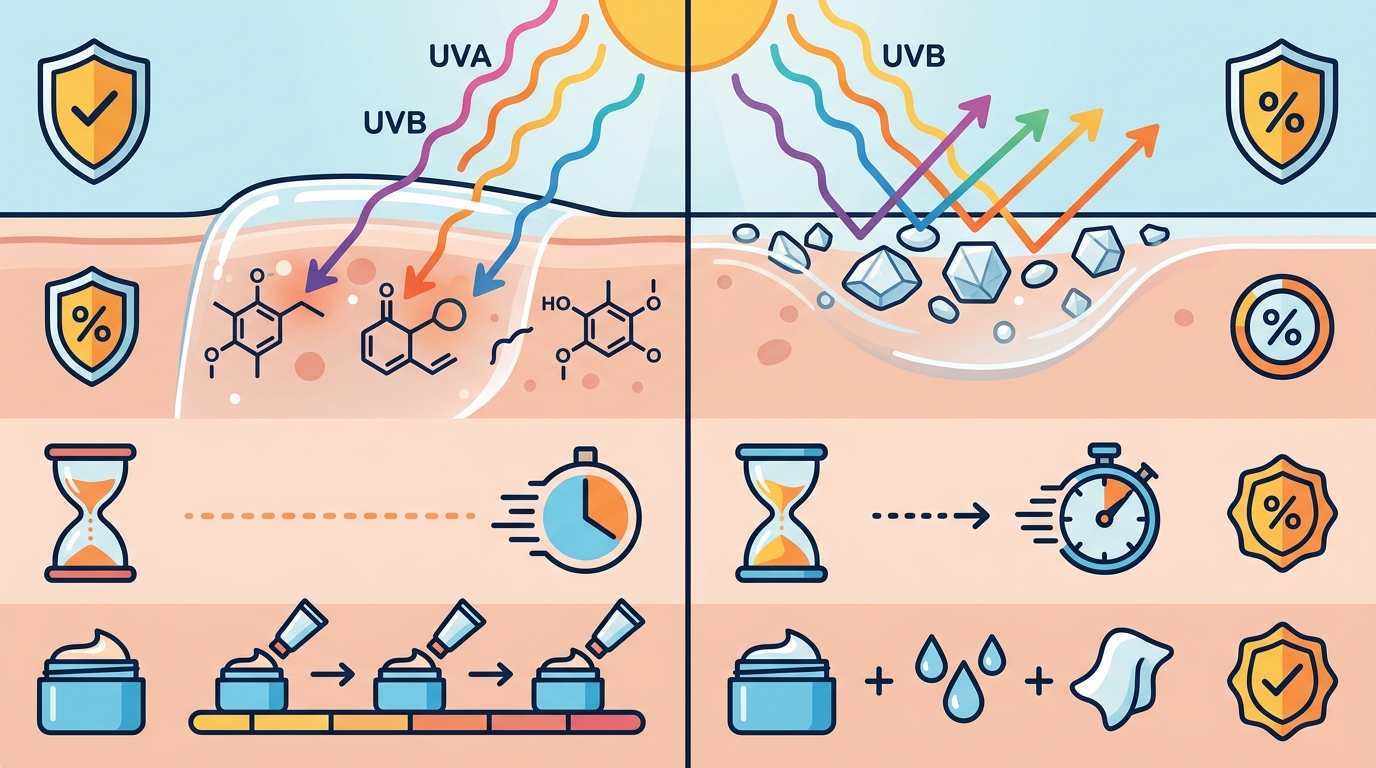
To compare effectiveness, we must first define how each type functions. Chemical sunscreen is a formulation that uses organic filters to absorb ultraviolet radiation and convert it into heat. Physical sunscreen is a formulation that uses inorganic minerals, such as zinc oxide or titanium dioxide, to scatter and reflect UV rays. Clear sunscreen is a specific texture that dries down to an invisible finish, regardless of whether the active ingredients are chemical or mineral.
Chemical filters, such as avobenzone and octocrylene, work by absorbing UV energy. When UV light hits these molecules, they absorb the energy and release it as heat. This process is highly efficient but requires the molecules to remain stable. Some chemical filters are photounstable, meaning they break down after absorbing UV light, which reduces their effectiveness over time. This is why reapplication is critical for chemical sunscreens.
Physical filters, specifically non-nano zinc oxide, work by creating a physical barrier on the skin. They scatter UV radiation away from the skin. This mechanism is inherently stable because the mineral particles do not break down under UV exposure. However, physical sunscreens have historically been associated with a white cast. Modern clear physical sunscreens, like those using waterless gel technology, have solved this issue by suspending the minerals in a clear base.
For everyday use, both types are effective if they are broad-spectrum and have an SPF of 30 or higher. The choice often comes down to skin sensitivity and lifestyle. Chemical sunscreens are often lighter and easier to layer under makeup. Physical sunscreens are generally gentler and better for sensitive or reactive skin. At Sonrei, we offer both types in clear formats, allowing you to choose based on your specific needs.
Application Timing
Timing is the first factor that affects the real-world effectiveness of your sunscreen. The label instructions for chemical and physical sunscreens differ slightly, and following them is essential for full protection.
Chemical Sunscreen Timing
Chemical sunscreens require a waiting period before sun exposure. The standard recommendation is to apply chemical sunscreen 15 to 20 minutes before going outside. This waiting period allows the active ingredients to bind to the skin and reach their full protective capacity. If you apply chemical sunscreen and immediately go into the sun, you are not fully protected. The molecules need time to settle and form a uniform film.
This timing requirement is a common reason why people skip reapplication. It is inconvenient to wait 15 minutes every time you need to reapply. However, skipping the wait time significantly reduces the SPF you actually receive. For example, if you apply SPF 50 chemical sunscreen and go outside immediately, you may only get the protection of SPF 15 or lower.
Physical Sunscreen Timing
Physical sunscreens can be applied immediately before sun exposure. Because they work by sitting on top of the skin and scattering light, they do not need time to bind or activate. You can apply a physical sunscreen and walk out the door. This makes them ideal for last-minute outdoor activities or for people who forget to plan ahead.
However, even with physical sunscreens, it is best to apply them as part of your morning routine. This ensures that you have a consistent layer of protection before you start your day. It also gives you a chance to check for any missed spots. Applying sunscreen as a habit, rather than a last-minute task, leads to better long-term protection.
Practical Tips for Timing
For everyday use, consider your schedule. If you have a busy morning, a physical sunscreen might be the better choice because it is ready to go immediately. If you have time to spare, a chemical sunscreen is a great option, especially if you prefer a lighter texture. You can also use a combination: apply a physical sunscreen in the morning and reapply with a chemical sunscreen or a mist during the day.
Remember that the clock starts when you apply the sunscreen, not when you go outside. If you apply at 8:00 AM and go outside at 8:15 AM, you are fully protected. If you apply at 8:15 AM and go outside at 8:15 AM, you are not. This simple distinction is crucial for maximizing effectiveness.
Reapplication Requirements
Reapplication is the most important factor in maintaining sunscreen effectiveness. No sunscreen, whether chemical or physical, lasts all day. The protective layer degrades over time due to UV exposure, sweat, and friction. Understanding the reapplication requirements for each type is key to staying protected.
Chemical Sunscreen Reapplication
Chemical sunscreens generally require reapplication every two hours. This is because the active ingredients can break down under UV exposure. Photounstable filters, in particular, lose their effectiveness quickly. Even if you are not sweating, the UV rays themselves degrade the chemical filters. This means that if you are outside for four hours, you need to reapply at least once, even if you are not swimming or sweating.
Reapplication is also necessary after sweating, swimming, or towel drying. Most sunscreens are labeled as water-resistant for 40 or 80 minutes. This means that after 40 or 80 minutes of swimming or sweating, the sunscreen is no longer effective and must be reapplied. For chemical sunscreens, you must wait 15 to 20 minutes after reapplication before going back into the sun. This makes reapplication a bit more involved.
Physical Sunscreen Reapplication
Physical sunscreens also require reapplication every two hours. However, because the mineral particles are stable, they do not break down as quickly as chemical filters. This means that a physical sunscreen might maintain its effectiveness slightly longer than a chemical sunscreen under the same conditions. That said, the physical layer can still be removed by sweat, friction, and water. So, the two-hour rule still applies.
The advantage of physical sunscreens is that you do not need to wait after reapplication. You can reapply and immediately go back outside. This makes them more convenient for active lifestyles. If you are hiking, playing sports, or spending a long day at the beach, a physical sunscreen is often the better choice because reapplication is faster and easier.
Strategies for Consistent Reapplication
One of the biggest challenges with reapplication is remembering to do it. Here are some strategies to help you stay consistent:
- Set a Timer: Use your phone to set a reminder every two hours when you are outside.
- Keep a Backup: Always carry a small bottle or a mist in your bag. Having a backup makes it easier to reapply.
- Use a Mist: Mists are the easiest way to reapply sunscreen. They are quick, convenient, and do not require rubbing. Sonrei's Organic SPF 50 Mist is a great option for reapplication because it is clear and easy to use.
- Reapply After Meals: If you are eating outside, use the time after your meal to reapply sunscreen. This is a natural break in your day that you can use for skincare.
Consistency is more important than the specific type of sunscreen you use. If you use a chemical sunscreen but never reapply, you are not protected. If you use a physical sunscreen and reapply every two hours, you are protected. The goal is to build a habit of reapplication that fits your lifestyle.
Effectiveness Comparison Table
The following table summarizes the key differences between chemical and physical clear sunscreens for everyday use.
| Feature | Chemical Clear Sunscreen | Physical Clear Sunscreen |
|---|---|---|
| Active Ingredients | Avobenzone, Octocrylene, Homosalate | Zinc Oxide, Titanium Dioxide |
| Mechanism | Absorbs UV and converts to heat | Scatters and reflects UV |
| Application Timing | 15-20 minutes before sun | Immediately before sun |
| Reapplication Wait Time | 15-20 minutes | None |
| Stability | Can break down under UV | Stable under UV |
| Texture | Light, invisible | Light, invisible (modern formulas) |
| Skin Sensitivity | May irritate sensitive skin | Gentle, suitable for sensitive skin |
| Best For | Everyday wear, under makeup | Active lifestyles, sensitive skin |
This table highlights that both types are effective, but they have different strengths. Chemical sunscreens are better for everyday wear because they are lighter and easier to layer. Physical sunscreens are better for active lifestyles because they are more stable and easier to reapply. The best choice depends on your specific needs and preferences.
Key Takeaways
- Chemical and physical sunscreens are both effective when applied correctly and reapplied every two hours.
- Chemical sunscreens require a 15-20 minute wait time before sun exposure and after reapplication.
- Physical sunscreens can be applied immediately before sun exposure and do not require a wait time after reapplication.
- Chemical filters can break down under UV exposure, while physical filters are stable.
- Modern clear physical sunscreens do not leave a white cast, making them a viable option for all skin tones.
- Reapplication is the most important factor in maintaining sunscreen effectiveness, regardless of type.
- Choose a chemical sunscreen for everyday wear and a physical sunscreen for active lifestyles or sensitive skin.
- Use a mist for easy reapplication during the day to maintain consistent protection.
Frequently Asked Questions
Is chemical sunscreen less effective than physical sunscreen?
No, both types are equally effective when applied correctly. The difference lies in how they work and how they feel on the skin. Chemical sunscreens absorb UV, while physical sunscreens scatter it. Both provide broad-spectrum protection if they have an SPF of 30 or higher.
Do I need to wait 15 minutes after applying physical sunscreen?
No, physical sunscreens can be applied immediately before sun exposure. They do not need time to bind to the skin. You can apply them and go outside right away.
How often should I reapply sunscreen?
You should reapply sunscreen every two hours, or immediately after swimming, sweating, or towel drying. This applies to both chemical and physical sunscreens.
Can I use chemical sunscreen under makeup?
Yes, chemical sunscreens are often lighter and easier to layer under makeup. They dry down to an invisible finish, which makes them a good base for foundation. Just remember to wait 15-20 minutes before applying makeup to allow the sunscreen to set.
Are physical sunscreens better for sensitive skin?
Generally, yes. Physical sunscreens are less likely to cause irritation because they sit on top of the skin rather than being absorbed into it. They are a good choice for people with sensitive or reactive skin.
Do clear sunscreens work as well as white sunscreens?
Yes, the color of the sunscreen does not affect its effectiveness. Clear sunscreens use the same active ingredients as white sunscreens. The difference is in the texture and the base formula. Clear sunscreens are designed to be invisible on the skin.
What is the best sunscreen for everyday use?
The best sunscreen is the one you will actually use and reapply. If you prefer a light texture, choose a chemical sunscreen. If you have sensitive skin or an active lifestyle, choose a physical sunscreen. Both are effective if used correctly.
Conclusion
Choosing between chemical and physical clear sunscreens comes down to your lifestyle and skin type. Both types are effective for everyday use if you follow the application and reapplication guidelines. Chemical sunscreens are ideal for those who prefer a light texture and have time to wait before sun exposure. Physical sunscreens are perfect for active individuals and those with sensitive skin who need immediate protection and easy reapplication.
At Sonrei, we believe that sun protection should be effortless and effective. Our clear sunscreens, whether chemical or physical, are designed to disappear into your skin and your routine. Explore our Growth Factor Sunscreen Collection or our Mineral Sunscreen Collection to find the perfect match for your needs. Remember, the best sunscreen is the one you will use consistently. Make sun protection a habit, and your skin will thank you. according to Sun protection a