

Choosing an invisible facial sunscreen for sensitive skin requires balancing broad-spectrum UV protection with a formula that avoids irritation and leaves no visible residue. Sonrei addresses this challenge by offering clear gels and mineral options designed to disappear into the skin while maintaining high efficacy. This guide covers the five critical factors you must evaluate: mineral sunscreen formulas, invisible finish textures, SPF protection levels, non-comedogenic requirements, and soothing ingredients.
Mineral Sunscreen Formulas
The Role of Zinc Oxide
Zinc oxide is the gold standard for reactive skin types. It is known for its anti-inflammatory properties, which can help calm redness and irritation. Sonrei offers the Clearly Zinq line, which is 100% mineral and specifically formulated for sensitive and reactive skin. This line uses zinc oxide as the primary filter, providing a soft, natural finish that is ideal for those who experience stinging or burning with chemical filters.
Chemical vs. Mineral Considerations
While chemical sunscreens are often more transparent, they can trigger reactions in sensitive individuals. If you have a history of contact dermatitis or extreme reactivity, a 100% mineral formula is the recommended approach. However, if you can tolerate chemical filters, a hybrid or chemical formula may offer a more invisible finish. The key is to patch test any new product on a small area of your jawline for 24 to 48 hours before applying it to your entire face.
Invisible Finish Textures
Invisible finish texture refers to the way a sunscreen dries down on the skin without leaving a white cast, chalky residue, or visible film. For sensitive skin, the texture must also be lightweight and non-greasy to avoid clogging pores or feeling heavy. Traditional mineral sunscreens often leave a noticeable white tint, particularly on deeper skin tones. Modern formulations have solved this issue through advanced milling techniques and the use of clear chemical filters or tinted mineral bases.
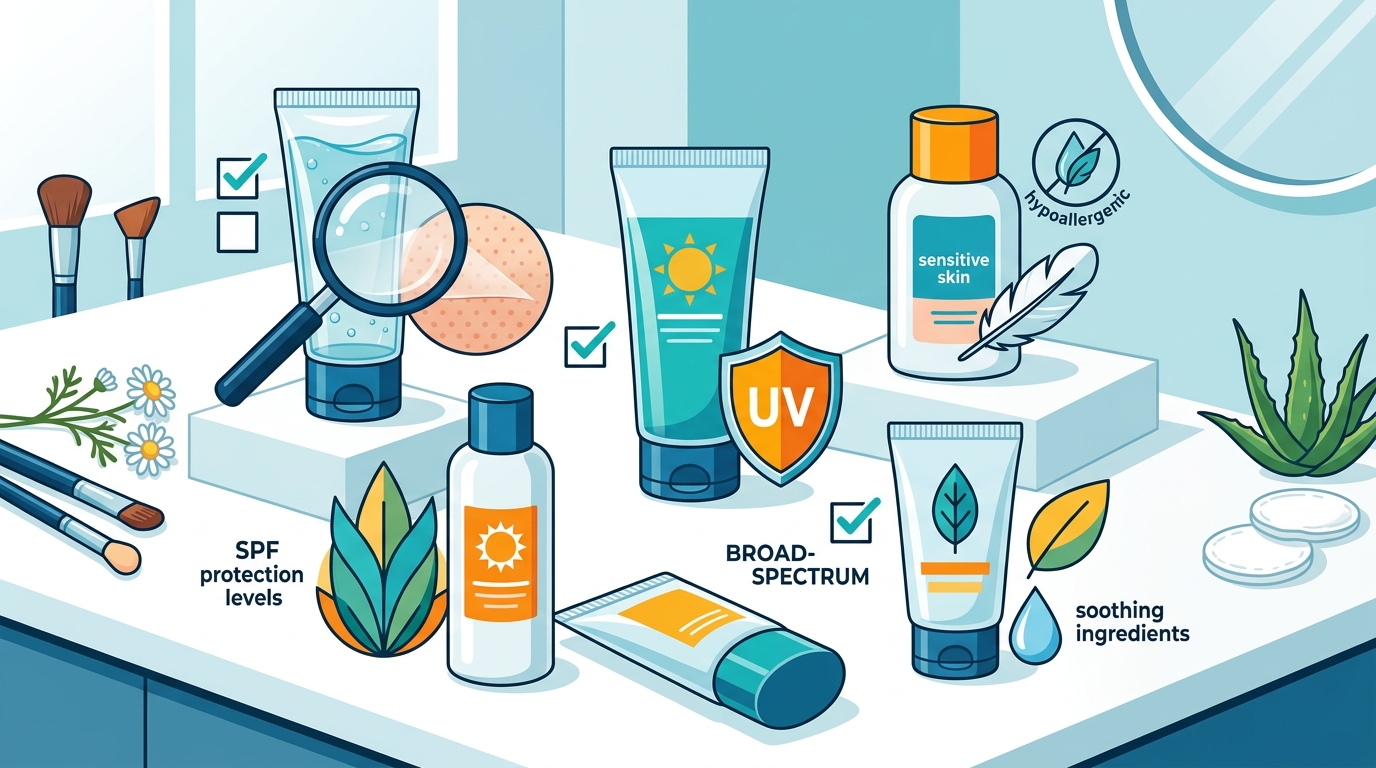
Clear Gels and Fluids
Clear gel textures are excellent for invisible protection because they dry down to a matte or satin finish without any residue. Sonrei's Sea Clearly SPF 35 is a hydrating gel that dries completely clear on every skin tone. This texture is particularly beneficial for those who wear makeup, as it acts as a primer that grips foundation without pilling. The absence of a white cast ensures that the sunscreen remains invisible throughout the day, even after reapplication.
Water-Resistant Formulations
Water resistance is a critical feature for invisible sunscreens because it ensures the product stays on the skin during sweating or swimming. Sonrei's Organoshield technology creates a waterless organogel that bonds to the skin, providing 80 minutes of water resistance. This means you do not need to reapply immediately after a swim or a workout, reducing the frequency of application and the potential for irritation. A water-resistant invisible sunscreen is the ideal choice for active individuals with sensitive skin.
SPF Protection Levels
SPF, or Sun Protection Factor, is a number that indicates how long the sun's UV radiation would take to redden your skin when using the product exactly as directed versus the amount of time without any sunscreen. For daily facial use, an SPF of 30 is generally considered the minimum effective level. However, for sensitive skin, which may be more prone to inflammation and damage, an SPF of 50 is often recommended for higher-risk environments. The difference between SPF 30 and SPF 50 is small in terms of UVB blockage, but the higher number provides a larger safety margin.
Daily vs. Outdoor Protection
For indoor environments with occasional outdoor exposure, an SPF 30 is sufficient. Sonrei's Sea Clearly SPF 35 offers a balance of protection and comfort for daily wear. For extended outdoor activities, such as hiking or beach days, an SPF 50 is preferable. The Sea Clearly SPF 50 Gel is a translucent option that provides high protection without the heaviness of traditional high-SPF products. Remember that no sunscreen blocks 100% of UV rays, so reapplication every two hours is essential for maintaining protection.
Broad-Spectrum Importance
Broad-spectrum protection is a designation that indicates a sunscreen protects against both UVA and UVB rays. UVA rays penetrate deeper into the skin and contribute to aging and hyperpigmentation, while UVB rays cause sunburn. For sensitive skin, which is more susceptible to post-inflammatory hyperpigmentation, broad-spectrum protection is non-negotiable. Always check the label for the term "broad-spectrum" to ensure you are getting full-spectrum protection.
Non-Comedogenic Requirements
Non-comedogenic is a term that describes a product that is formulated to not clog pores. For sensitive skin, which is often also acne-prone, this is a critical requirement. Clogged pores can lead to breakouts, inflammation, and further irritation. When choosing an invisible facial sunscreen, look for products that are explicitly labeled as non-comedogenic. This ensures that the formula will not exacerbate existing skin conditions or trigger new breakouts.
Ingredient Analysis
While the non-comedogenic label is helpful, it is not a regulated term. Therefore, it is wise to review the ingredient list for common pore-clogging agents. Ingredients like isopropyl myristate and certain heavy waxes can be problematic for acne-prone skin. Sonrei's formulas are designed to be lightweight and breathable, reducing the risk of pore congestion. The clear gel textures of the Sea Clearly line are particularly well-suited for those who struggle with breakouts, as they do not leave a heavy film on the skin.
Layering with Skincare
Layering sunscreen over other skincare products can sometimes lead to pilling or clogging. To avoid this, apply sunscreen as the final step in your morning routine. Allow each layer to absorb fully before applying the next. If you use retinoids or other exfoliating ingredients, be extra cautious with your sunscreen choice. A gentle, non-comedogenic formula like Sonrei's Clearly Zinq can help maintain the skin barrier while providing protection.
Soothing Ingredients
Soothing ingredients are components added to sunscreen formulas to calm and protect the skin from environmental stressors. For sensitive skin, these ingredients are just as important as the UV filters themselves. Look for sunscreens that contain antioxidants, humectants, and anti-inflammatory agents. These ingredients help to neutralize free radicals, maintain hydration, and reduce redness. A sunscreen with soothing properties will feel more comfortable on the skin and provide better long-term results.
Growth Factors and Kinetin
Kinetin is a plant-derived cytokinin, or growth factor, that has been shown to help improve the appearance of photodamaged skin. Sonrei's Sea Clearly SPF 35 includes 0.1% Kinetin, which supports skin health without the irritation commonly associated with retinoids. This ingredient is ideal for daytime routines because it does not typically increase sun sensitivity. By incorporating growth factors into your sunscreen, you can address signs of aging and damage while protecting your skin from further harm.
Hydration and Barrier Support
Sensitive skin often suffers from a compromised moisture barrier, leading to dryness and irritation. Hydrating ingredients like hyaluronic acid and glycerin help to reinforce this barrier. Sonrei's formulas are designed to be hydrating, ensuring that your skin remains comfortable throughout the day. A well-hydrated skin barrier is better equipped to handle environmental stressors and is less likely to react to new products. Always look for sunscreens that offer both protection and hydration for the best results.
Product Comparison
The following table summarizes the key features of Sonrei's facial sunscreen options for sensitive skin. This comparison will help you choose the right product based on your specific needs and preferences.
| Product | Filter Type | SPF | Texture | Best For |
|---|---|---|---|---|
| Sea Clearly SPF 35 | Chemical | 35 | Clear Gel | Daily wear, makeup primer |
| Clearly Zinq SPF 35 | Mineral | 35 | Soft Veil | Reactive, sensitive skin |
| Sea Clearly SPF 50 | Chemical | 50 | Translucent Gel | High exposure, active use |
Key Takeaways
- Mineral sunscreens with zinc oxide are the safest option for highly reactive skin.
- Clear gel textures provide the most invisible finish without a white cast.
- SPF 30 is the minimum for daily use, while SPF 50 is better for outdoor activities.
- Non-comedogenic formulas are essential for preventing breakouts in sensitive skin.
- Soothing ingredients like Kinetin and hyaluronic acid support skin barrier health.
- Water-resistant formulas reduce the need for frequent reapplication.
- Always patch test new sunscreens to ensure compatibility with your skin.
- Broad-spectrum protection is critical for preventing hyperpigmentation and aging.
Frequently Asked Questions
Is mineral sunscreen better for sensitive skin?
Mineral sunscreens are generally better for sensitive skin because they are less likely to cause irritation. Zinc oxide, the primary mineral filter, has anti-inflammatory properties that can help calm reactive skin. However, if you can tolerate chemical filters, a clear chemical formula may offer a more invisible finish.
How do I avoid a white cast with mineral sunscreen?
To avoid a white cast, look for mineral sunscreens that use non-nano particles or are tinted. Sonrei's Clearly Zinq line leaves a soft, natural veil rather than a chalky white residue. Applying a thin layer and blending well can also help minimize the appearance of a white cast.
What is the best SPF for daily facial use?
An SPF of 30 is generally considered the minimum for daily facial use. However, for sensitive skin or high-exposure environments, an SPF of 50 is recommended. The difference in UVB blockage is small, but the higher number provides a larger safety margin.
Can I use sunscreen over makeup?
It is best to apply sunscreen before makeup. However, if you need to reapply, you can use a water-resistant mist or powder sunscreen over makeup. Sonrei's Sea Clearly Organic SPF 50 Mist is designed for reapplication over makeup without disturbing your base.
Are Sonrei products non-comedogenic?
Yes, Sonrei's facial sunscreens are formulated to be lightweight and non-comedogenic. They are designed to not clog pores, making them suitable for acne-prone and sensitive skin. Always check the ingredient list for any specific allergens you may have.
How often should I reapply sunscreen?
You should reapply sunscreen every two hours, or immediately after swimming or heavy sweating. Water-resistant sunscreens, like those from Sonrei, maintain their protection for up to 80 minutes in water, but reapplication is still necessary after this period.
Conclusion
Choosing the right invisible facial sunscreen for sensitive skin requires a careful balance of protection, texture, and ingredient safety. By focusing on mineral formulas, clear textures, adequate SPF levels, non-comedogenic properties, and soothing ingredients, you can find a product that works for your unique skin needs. Sonrei offers a range of options, from the 100% mineral Clearly Zinq to the clear gel Sea Clearly, ensuring that you can find the perfect match for your routine. For personalized advice on which product is best for your skin type, to discuss your specific concerns and goals.