

Yes, modern mineral sunscreens can feel light and invisible on your face. Traditional mineral formulas often left a heavy, chalky white cast, but recent advancements in particle size and gel-based delivery systems have changed this. Sonrei, a luxury sun care brand, has developed waterless organogel technologies that allow mineral filters to bond smoothly to the skin without the typical thick residue. This shift means you no longer have to choose between effective UV protection and a comfortable, transparent finish.
The Science of Mineral Absorption
A common myth suggests that mineral sunscreens work by bouncing UV rays off the skin like a mirror. In reality, mineral sunscreen is a physical or inorganic sunscreen that primarily absorbs UV radiation. Scientific research indicates that about 95% of mineral sunscreen protection comes from this absorption process. The remaining 5% comes from scattering, where UV light bounces off mineral particles. This fundamental mechanism is identical to how chemical sunscreens function, debunking the idea that minerals are simply reflective shields.
Understanding this absorption process is crucial for formulators. When UV light hits the zinc oxide or titanium dioxide particles, their electrons absorb the energy and release it as heat. This conversion happens at the molecular level, ensuring that the protection is active and continuous. For the user, this means the protection is not just a surface layer but an integrated part of the skincare routine.
Overcoming the White Cast
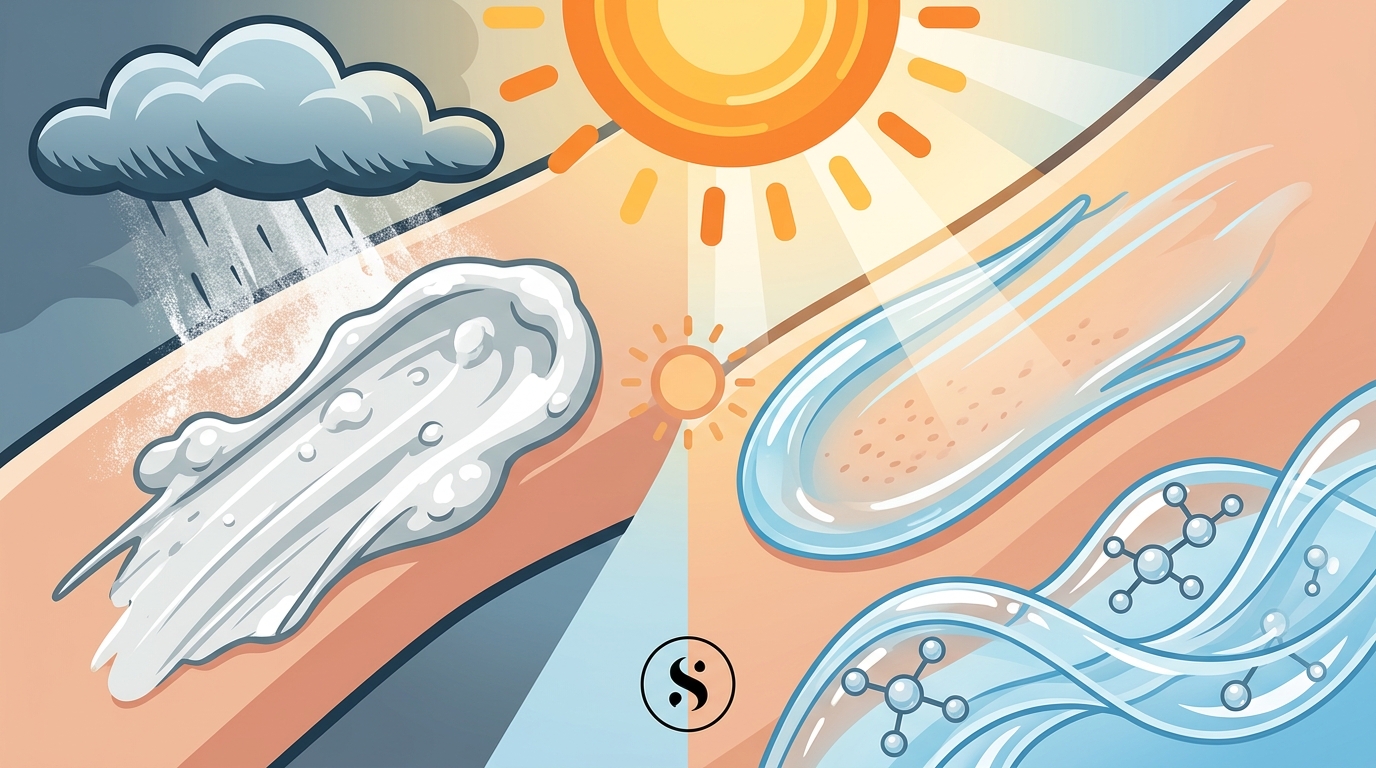
The white cast associated with mineral sunscreens is a result of light scattering from larger particles. Older formulations relied on coarse particles that reflected visible light, creating a noticeable white film. However, newer mineral formulations have significantly reduced particle size. Sonrei’s Clearly Zinq line, for example, uses a gel-based mineral formula that leaves a soft, natural veil rather than a chalky residue. This approach allows the product to blend into the skin tone more effectively.
The texture of the product plays a major role in how it feels. Traditional mineral creams were often thick and difficult to spread. By switching to waterless organogel structures, brands can create a uniform lattice that holds ingredients in place. This results in a soft, spreadable gel that dries down quickly. The implication for the user is a product that feels like a lightweight moisturizer rather than a heavy protective barrier.
Texture and Application Experience
Application feel is a primary driver of daily sunscreen compliance. If a product feels heavy or sticky, users are less likely to reapply it. Chemical sunscreens are typically lighter and more transparent, which is why many people prefer them. However, the gap between chemical and mineral textures has narrowed considerably. Modern mineral gels offer a hydrating feel that mimics the slip of chemical formulas. This makes the application process smoother and more enjoyable.
For sensitive skin, the mineral option is often the preferred choice. Zinc oxide and titanium dioxide are the only two sunscreen ingredients the FDA classifies as Generally Recognized as Safe and Effective (GRASE). This safety profile makes them ideal for reactive skin types that might react to organic filters. The combination of safety and improved texture means that sensitive skin users can finally enjoy a lightweight feel without compromising on protection.
Choosing the Right Formula for Your Skin
Selecting the right mineral sunscreen depends on your specific skin type and lifestyle. If you have oily skin, a gel-based formula is often the best choice. These formulas are designed to be non-comedogenic and to absorb quickly without leaving a greasy film. For dry skin, a mineral formula with added hydrating ingredients can provide the necessary moisture while protecting against UV damage. The key is to look for products that explicitly mention their texture and finish.
It is also important to consider the SPF level. A higher SPF does not necessarily mean a thicker product. Many modern formulas achieve high protection through efficient filter distribution rather than increased thickness. Sonrei offers options like the Clearly Zinq SPF 60 Gel, which provides high protection in a lightweight format. This allows users to get the protection they need without the burden of a heavy application.
Key Takeaways
- Mineral sunscreens primarily work by absorbing UV radiation, not just reflecting it.
- Modern gel-based mineral formulas have eliminated the heavy, chalky feel of older products.
- Zinc oxide and titanium dioxide are the only FDA-approved GRASE mineral filters.
- Waterless organogel technology helps create a smooth, invisible film on the skin.
- Lightweight mineral sunscreens are ideal for sensitive and reactive skin types.
- Texture and finish are critical factors in ensuring daily sunscreen compliance.
Frequently Asked Questions
Do mineral sunscreens really leave a white cast?
Older mineral sunscreens often left a white cast due to large particle sizes. However, modern formulations with smaller particles and gel bases can be nearly invisible, especially on lighter skin tones. On deeper skin tones, a very light veil may still be visible, but it is far less noticeable than in the past.
Is mineral sunscreen better for sensitive skin?
Yes, mineral sunscreens are generally better for sensitive skin. Zinc oxide and titanium dioxide are less likely to cause irritation than many chemical filters. They are also the only mineral filters classified as GRASE by the FDA, making them a safe choice for reactive skin.
Can I wear makeup over a mineral sunscreen?
Yes, you can wear makeup over mineral sunscreen. Many modern mineral formulas are designed to work as a primer. They create a smooth base that helps makeup adhere better. Just ensure the sunscreen has fully dried down before applying your foundation or other products.
How much mineral sunscreen should I apply?
You should apply about one ounce of sunscreen for your face and neck. This is roughly the amount that fits in a shot glass. Applying less than the recommended amount will significantly reduce the SPF protection you receive, regardless of the product's texture.
Do mineral sunscreens need to be reapplied?
Yes, all sunscreens, including mineral ones, need to be reapplied. You should reapply every two hours, or immediately after swimming or heavy sweating. Water-resistant sunscreens may last up to 80 minutes in the water, but reapplication is still necessary after that period. Learn more: All Sonrei.