

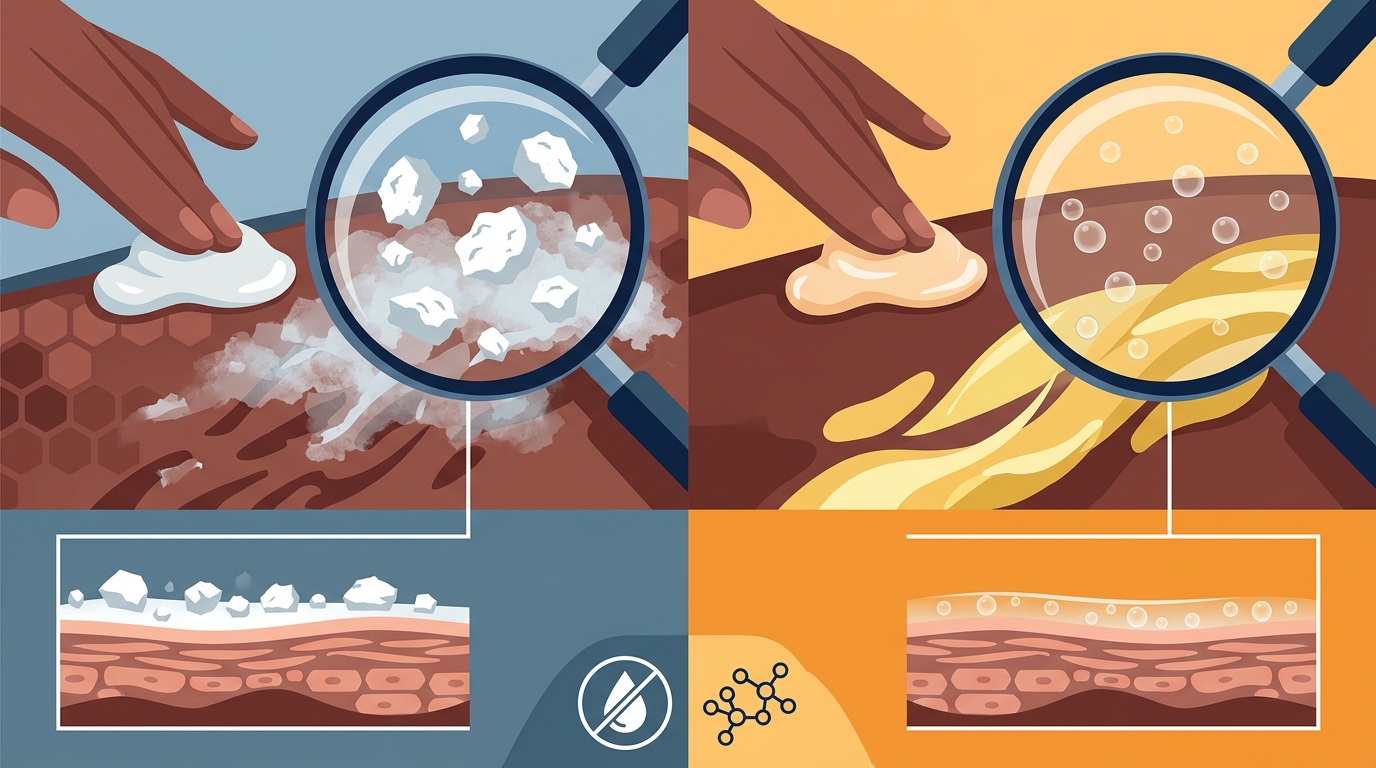
Clear gel sunscreens leave a chalky film when mineral particles are too large or when the formula lacks the right emulsifiers to blend with skin oils. Sonrei addresses this by using a waterless organogel technology that creates a smooth, clear film that bonds to the skin without leaving a white residue. This approach ensures that protection remains invisible on all skin tones, particularly for those with deeper complexions who are most affected by white cast.
The Science of White Cast
White cast is a visual artifact caused by the way light interacts with sunscreen ingredients. Mineral sunscreen is a type of physical blocker that uses particles like zinc oxide and titanium dioxide to reflect UV rays. When these particles are large or unevenly distributed, they scatter visible light, creating a white or grayish film on the skin. This is a common issue with traditional mineral sunscreens, which often rely on high concentrations of these minerals to achieve adequate SPF.
The size of the mineral particles is the primary determinant of white cast. Larger particles scatter more light, resulting in a more pronounced white appearance. In contrast, smaller particles allow more light to pass through, reducing the visual impact. However, simply making particles smaller is not enough. The formulation must also ensure that the particles are evenly dispersed and that the base of the sunscreen is compatible with the skin's natural oils.
Sonrei's Organoshield technology uses a waterless organogel structure to hold sunscreen ingredients in a uniform lattice. This structure helps to keep the particles evenly distributed and prevents them from clumping together, which can exacerbate white cast. The result is a sunscreen that goes on clear and dries fast, providing protection without the chalky finish.
Formulation and Base Ingredients
The base of a sunscreen plays a crucial role in how it feels and looks on the skin. Water-based sunscreens are a type of formula that uses water as the primary ingredient. These formulas can sometimes feel heavy or leave a residue, especially if they contain certain types of alcohols or silicones. On the other hand, oil-based or gel-based formulas tend to absorb more quickly and leave less residue.
Sonrei's Sea Clearly SPF 50 Gel is a translucent gel that is designed to be hydrating on the body. The gel base helps to spread the sunscreen evenly and allows it to absorb into the skin without leaving a white cast. The formula is also free of parabens and PABA, which can cause irritation in some people. By using a gel base, Sonrei ensures that the sunscreen feels light and comfortable, even in hot and humid conditions.
The choice of emulsifiers is also important. Emulsifiers help to blend the oil and water phases of the sunscreen, ensuring that the formula is stable and easy to apply. If the emulsifiers are not chosen carefully, the sunscreen can separate or leave a greasy or chalky film. Sonrei uses a combination of emulsifiers that are compatible with a wide range of skin types, ensuring that the sunscreen feels smooth and non-greasy.
Skin Tone and Pigmentation
Skin tone and pigmentation significantly affect how sunscreen appears on the skin. Melanin is a pigment that gives skin its color. People with darker skin tones have more melanin, which can make white cast more noticeable. This is because the contrast between the white sunscreen and the darker skin is more pronounced. As a result, people with deeper skin tones are more likely to experience dissatisfaction with sunscreens that leave a white film.
Sonrei was created with the goal of crafting products for all skin tones and types. The brand recognizes that sun care is not just about SPF, but also about how the product feels and looks on the skin. By using a clear gel formula, Sonrei ensures that its sunscreens are invisible on all skin tones. This is particularly important for people with deeper skin tones, who may otherwise be forced to choose between protection and appearance.
The brand's commitment to inclusivity is reflected in its product development process. Sonrei works with a diverse group of testers to ensure that its sunscreens perform well on a wide range of skin types and tones. This approach helps to identify and address issues like white cast before the product is released to the market. The result is a sunscreen that not only protects the skin but also enhances its natural beauty.
Application Techniques and Reapplication
Application technique can also affect how sunscreen appears on the skin. Sunscreen application is the process of applying sunscreen to the skin to protect it from UV radiation. The amount of sunscreen applied and the method of application can both influence the final appearance. Applying too much sunscreen can lead to a thicker film, which may be more likely to leave a white cast. On the other hand, applying too little sunscreen can result in inadequate protection.
The FDA recommends applying about one ounce of sunscreen to the body and a nickel-sized amount to the face. However, the exact amount needed can vary depending on the individual and the product. It is important to follow the instructions on the label and to reapply sunscreen every two hours, or more frequently if swimming or sweating. Reapplication is crucial for maintaining protection, but it can also lead to a buildup of sunscreen on the skin, which may affect its appearance.
Sonrei's mist formulas are designed to make reapplication easy and convenient. The Sea Clearly Organic SPF 50 Mist is a clear spray that can be reapplied over makeup without disturbing it. This makes it easy to maintain protection throughout the day without having to remove and reapply makeup. The mist formula also helps to ensure that the sunscreen is applied evenly, reducing the risk of white cast.
Choosing the Right Sunscreen for Your Skin
Choosing the right sunscreen depends on your skin type, tone, and lifestyle. Broad-spectrum sunscreen is a type of sunscreen that protects against both UVA and UVB rays. UVA rays are responsible for aging and wrinkles, while UVB rays are responsible for sunburn. A broad-spectrum sunscreen with an SPF of 30 or higher is recommended for daily use. When choosing a sunscreen, it is important to consider the type of formula, the ingredients, and the application method.
For people with sensitive skin, a mineral sunscreen may be a good choice. Mineral sunscreens are less likely to cause irritation than chemical sunscreens. However, they can leave a white cast, so it is important to choose a formula that is designed to be clear. Sonrei's Clearly Zinq SPF 60 Gel is a 100% mineral sunscreen that is sensitive skin friendly. It is designed to provide high protection without leaving a white cast, making it a good option for people with sensitive skin.
For people with oily skin, a gel or mist formula may be a good choice. These formulas are lightweight and less likely to clog pores. Sonrei's Sea Clearly SPF 50 Gel is a good option for people with oily skin, as it is designed to be hydrating without being greasy. By choosing a sunscreen that is suited to your skin type, you can ensure that you get the best protection without compromising on appearance.
Key Takeaways
- White cast is caused by the scattering of light by mineral particles in sunscreen.
- The size and distribution of mineral particles are key factors in determining white cast.
- Waterless organogel technology can help to reduce white cast by keeping particles evenly distributed.
- Skin tone and pigmentation affect how sunscreen appears on the skin, with darker tones being more susceptible to white cast.
- Application technique and reapplication frequency can influence the final appearance of sunscreen.
- Choosing a sunscreen that is suited to your skin type and tone can help to ensure both protection and a clear finish.
Frequently Asked Questions
Why does my sunscreen leave a white cast?
White cast is typically caused by mineral particles in the sunscreen that are too large or unevenly distributed. These particles scatter light, creating a white film on the skin. Choosing a sunscreen with smaller, more evenly distributed particles can help to reduce white cast.
Do chemical sunscreens leave a white cast?
Chemical sunscreens are less likely to leave a white cast than mineral sunscreens. This is because they work by absorbing UV rays rather than reflecting them. However, some chemical sunscreens can still leave a slight residue, especially if they contain certain types of alcohols or silicones.
How can I prevent white cast from sunscreen?
To prevent white cast, choose a sunscreen that is designed to be clear and invisible on the skin. Look for formulas that use smaller mineral particles or that are based on a gel or mist. Applying the sunscreen evenly and in the correct amount can also help to reduce white cast.
Is white cast more noticeable on darker skin tones?
Yes, white cast is more noticeable on darker skin tones. This is because the contrast between the white sunscreen and the darker skin is more pronounced. People with deeper skin tones should look for sunscreens that are specifically designed to be clear and invisible on all skin tones.
Can I reapply sunscreen without it looking chalky?
Yes, you can reapply sunscreen without it looking chalky by using a mist or gel formula. These formulas are lightweight and easy to apply, and they are less likely to leave a residue. Reapplying sunscreen every two hours is important for maintaining protection, and using a clear formula can help to ensure that it looks good on the skin.
Conclusion
Understanding why clear gel sunscreens leave a chalky film is the first step to finding a product that works for your skin. By choosing a formula that is designed to be clear and invisible, you can enjoy the benefits of sun protection without compromising on appearance. Sonrei is committed to creating sun care products that are crafted for every kind, ensuring that everyone can find a sunscreen that works for them. To explore our range of clear gel sunscreens, visit the Sonrei product collection.