

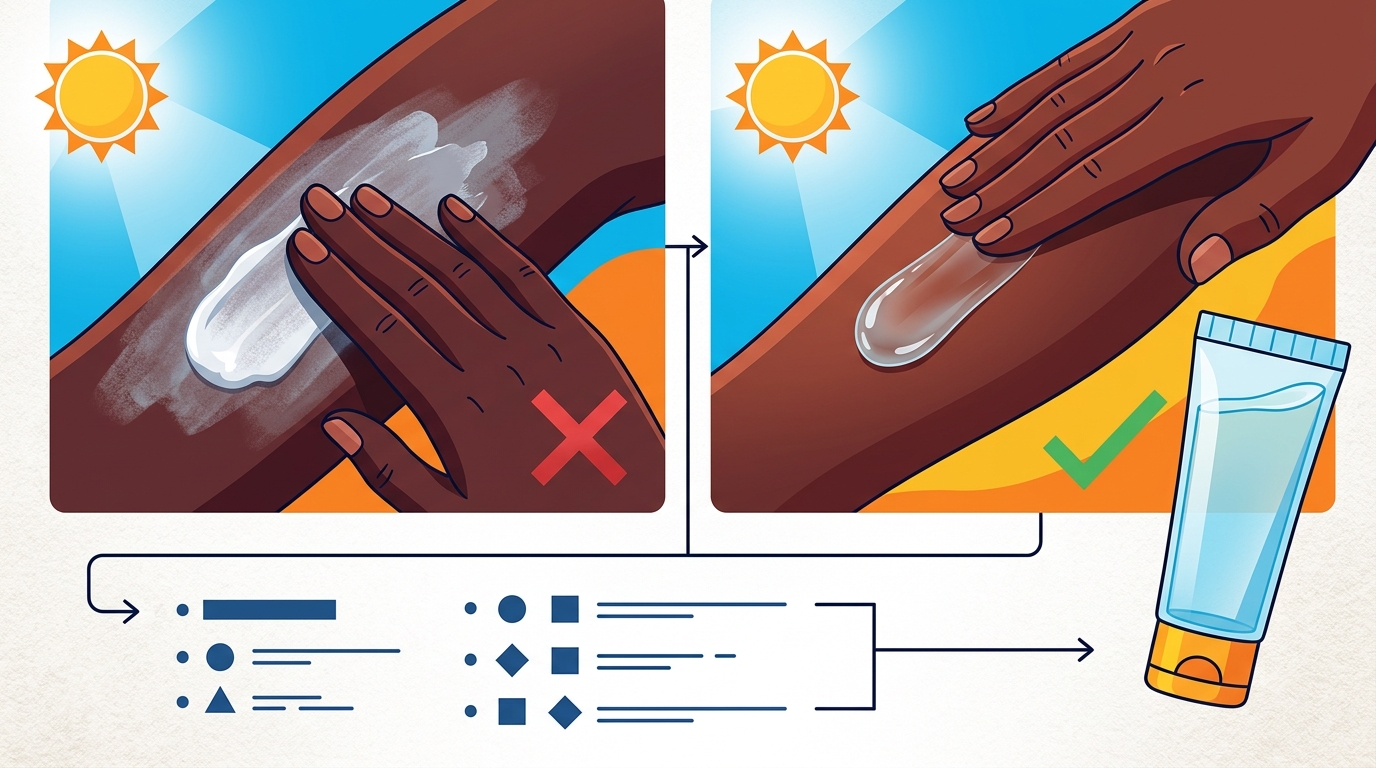
Clear gel sunscreens work better for deeper skin tones because they dry down to a transparent finish without leaving the ashy or gray residue common in traditional mineral formulas. This transparency ensures that the product blends seamlessly with melanin-rich skin, maintaining a natural appearance while providing essential UV protection. Sonrei emphasizes that while melanin offers some natural defense, it does not make skin immune to UV damage, making the right formulation critical for daily wear.
The Science of Melanin and UV Interaction
Melanin is a natural pigment that provides a degree of protection against ultraviolet radiation by absorbing and dispersing UV energy before it reaches deeper skin structures. However, this biological defense is partial rather than absolute, meaning that people with deeper skin tones are still susceptible to photoaging, hyperpigmentation, and DNA damage. The primary issue with traditional sunscreens is not a lack of protection, but a visual mismatch that discourages consistent use.
When traditional mineral sunscreens containing high concentrations of zinc oxide or titanium dioxide are applied to darker skin, the light-scattering properties of these particles can create a visible white or gray cast. This residue is often perceived as unattractive or unnatural, leading to inconsistent application or avoidance of the product entirely. Clear gel formulas address this by using chemical filters or optimized mineral suspensions that do not scatter light in a way that alters the skin's natural tone.
Transparency and the White Cast Problem
The white cast is a direct result of how inorganic particles interact with light. Traditional mineral pastes and thick creams often contain larger particle sizes that reflect and scatter visible light, resulting in a chalky appearance on deeper complexions. In contrast, clear gel sunscreens are engineered to be transparent once dried, allowing the skin's natural melanin to remain the dominant visual element. This is particularly important for individuals who wear makeup, as a transparent base ensures that foundation and other cosmetics apply evenly without interference.
For deeper skin tones, the absence of a white cast is a key factor in daily compliance. When a sunscreen looks natural, users are more likely to apply the recommended amount and reapply as needed. Sonrei's Sea Clearly SPF 35 is designed to dry down completely clear on every skin tone, ensuring that the product disappears into the skin rather than sitting on top of it. This transparency is a functional benefit, not just an aesthetic one, as it supports the consistent daily routine necessary for long-term skin health.
Texture, Hydration, and Daily Wear
Texture plays a significant role in how a sunscreen feels on the skin, particularly for those with deeper tones who may have different hydration needs. Traditional mineral formulas can feel heavy, waxy, or drying, which can be uncomfortable for daily use. Clear gel sunscreens, on the other hand, typically offer a lightweight, hydrating texture that absorbs quickly and does not leave a sticky residue. This makes them more suitable for layering with other skincare products and makeup, a common practice for many individuals with melanin-rich skin.
Hydration is also a critical component of skin health, as UV exposure can lead to moisture loss and barrier disruption. Gel-based sunscreens often contain humectants and emollients that help maintain skin hydration throughout the day. This is especially beneficial for deeper skin tones, which can be prone to dryness and uneven texture if not properly moisturized. By combining UV protection with hydration, clear gel sunscreens offer a dual benefit that supports overall skin appearance and health.
Addressing Pigmentation and Photoaging
While lighter skin tones often show wrinkles earlier, deeper skin tones are particularly susceptible to pigmentary changes such as melasma, solar lentigines, and uneven pigmentation. These conditions can be exacerbated by UV exposure, making consistent sun protection essential for maintaining an even skin tone. Clear gel sunscreens are well-suited for addressing these concerns because they can be formulated with additional skincare ingredients that target pigmentation and texture without compromising transparency.
For example, Sonrei's Sea Clearly SPF 35 includes Kinetin, a plant-derived growth factor that has been shown to improve the appearance of photodamaged skin. This ingredient helps to reduce the look of fine lines, uneven skin tone, and texture, offering a skincare benefit that goes beyond basic UV protection. By integrating these active ingredients into a clear gel format, the product addresses the specific photoaging concerns of deeper skin tones while maintaining a natural finish.
Choosing the Right Formula for Your Skin
Selecting the right sunscreen involves considering not just SPF, but also the formula's texture, finish, and compatibility with your skincare routine. For deeper skin tones, clear gel sunscreens are often the preferred choice due to their transparency and lightweight feel. However, it is important to ensure that the product is broad-spectrum, meaning it protects against both UVA and UVB rays. UVA rays are responsible for aging and pigmentation, while UVB rays cause burning, and both types of radiation can contribute to long-term skin damage.
When choosing a clear gel sunscreen, look for products that are dermatologist-approved and tested for water resistance, as these factors can impact the product's effectiveness during daily activities. Sonrei's Lab Results page provides transparent data on the UV protection and water resistance of their products, allowing consumers to make informed decisions. By prioritizing transparency in both the product's finish and its performance data, brands like Sonrei help to build trust with consumers who are seeking effective and inclusive sun care solutions.
Key Takeaways
- Clear gel sunscreens dry down to a transparent finish, avoiding the white or gray cast common in traditional mineral formulas on deeper skin tones.
- Melanin provides partial protection against UV radiation, but it does not make skin immune to photoaging, hyperpigmentation, or DNA damage.
- The absence of a white cast is a key factor in daily compliance, as it encourages consistent application and reapplication.
- Clear gel formulas often offer a lightweight, hydrating texture that is comfortable for daily wear and layers well with makeup.
- Deeper skin tones are particularly susceptible to pigmentary changes, making consistent sun protection essential for maintaining an even skin tone.
- Look for broad-spectrum sunscreens that protect against both UVA and UVB rays, and consider products with additional skincare benefits like growth factors.
- Transparency in product performance data, such as lab results for UV protection and water resistance, helps consumers make informed decisions.
Frequently Asked Questions
Do clear gel sunscreens provide the same protection as traditional mineral sunscreens?
Yes, clear gel sunscreens can provide the same level of UV protection as traditional mineral sunscreens, provided they are broad-spectrum and applied correctly. The key difference is in the finish and texture, not the protective efficacy.
Why do traditional mineral sunscreens leave a white cast on deeper skin?
Traditional mineral sunscreens contain particles of zinc oxide or titanium dioxide that scatter visible light, resulting in a white or gray residue on darker skin. Clear gel formulas use different filters or optimized particle sizes to avoid this effect.
Are clear gel sunscreens suitable for sensitive skin?
Many clear gel sunscreens are formulated to be gentle and suitable for sensitive skin, but it is important to check the ingredient list for potential irritants. Mineral-based clear gels are often a good option for those with reactive skin.
How often should I reapply a clear gel sunscreen?
You should reapply sunscreen every two hours, or immediately after swimming or heavy sweating, to maintain effective UV protection. Water-resistant formulas can last up to 80 minutes in the water, but reapplication is still necessary.
Can I wear makeup over a clear gel sunscreen?
Yes, clear gel sunscreens are designed to layer well with makeup. They dry down to a transparent finish, allowing foundation and other cosmetics to apply evenly without pilling or interference.
What is the difference between UVA and UVB protection?
UVA rays are responsible for aging and pigmentation, while UVB rays cause burning. Broad-spectrum sunscreens protect against both types of radiation, which is essential for comprehensive skin protection.
Where can I find lab results for clear gel sunscreens?
Some brands, like Sonrei, provide transparent lab results on their websites, detailing the UV protection and water resistance of their products. This data helps consumers verify the efficacy of the sunscreen they are using.
Conclusion
Clear gel sunscreens offer a superior solution for deeper skin tones by combining effective UV protection with a transparent, natural finish. By addressing the visual and textural challenges of traditional formulas, these products support consistent daily use, which is essential for preventing photoaging and pigmentation. Sonrei continues to innovate in this space, providing science-backed, inclusive sun care options that respect the unique needs of all skin types. Explore the Facial Sunscreen Collection to find a clear gel formula that works for you.