

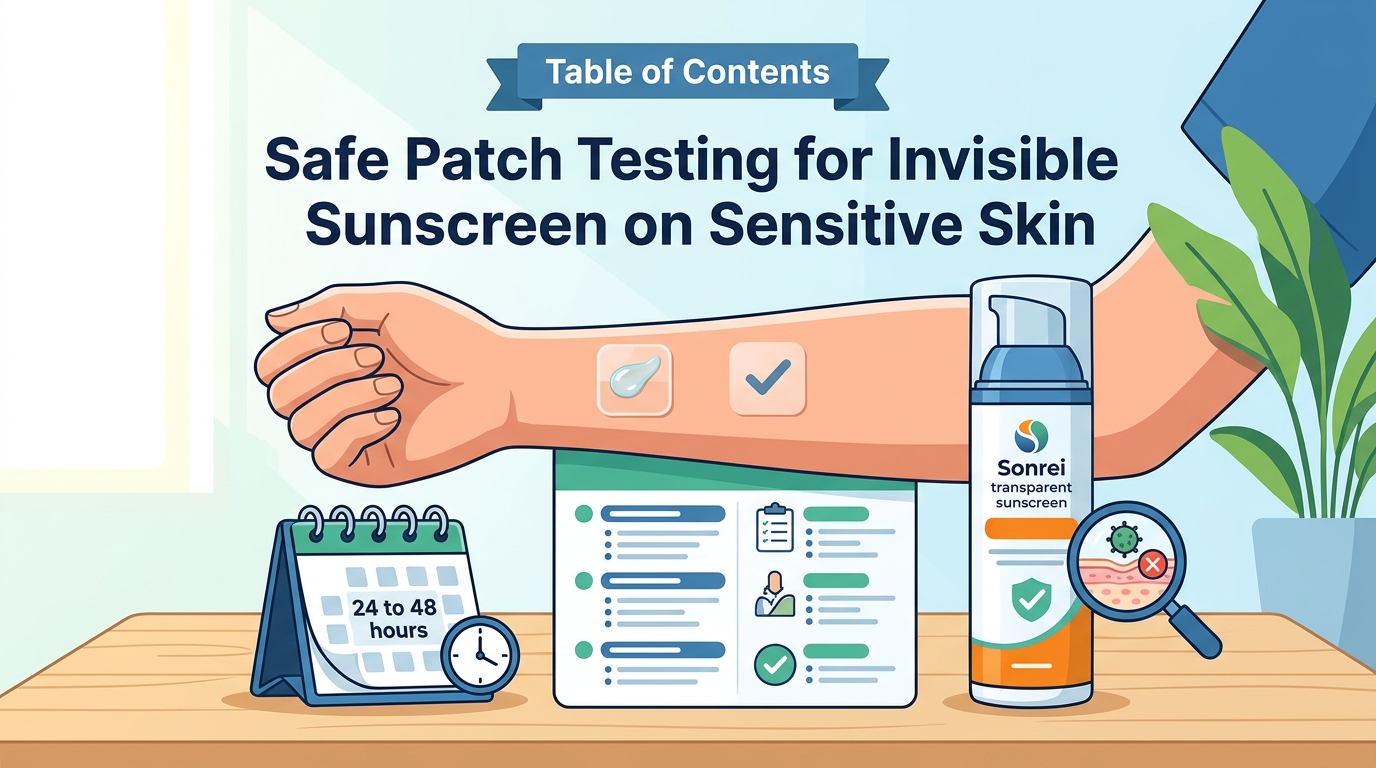
The safest way to test invisible sunscreen on sensitive skin is to apply a small amount to a discreet area, such as the inner forearm, and wait 24 to 48 hours before full application. This method allows you to identify potential irritants or allergens without exposing your entire face to a new formula. Sonrei recommends this cautious approach because sensitive skin often reacts to specific chemical filters or fragrances that may not be immediately obvious.
Why Patch Testing Matters for Sensitive Complexions
Sensitive skin is characterized by a compromised barrier function, making it more reactive to external stimuli. Patch testing is a dermatological procedure where a small quantity of a product is applied to a limited area of skin to monitor for adverse reactions. For those with reactive skin, skipping this step can lead to widespread redness, itching, or stinging. The goal is to isolate the reaction to a small zone so you can assess tolerance safely.
Invisible sunscreens often contain specific UV filters that may interact differently with your skin's microbiome or pH balance. While many formulas are designed to be gentle, individual sensitivities vary. By testing a product like the Sea Clearly SPF 50 Gel, you can verify how your skin handles the texture and ingredients before committing to a full routine. This proactive step saves you from wasting product and prevents unnecessary irritation.
Choosing the Right Test Site
The location of your patch test is critical for accurate results. The inner forearm is the standard recommendation because the skin there is thin and similar in reactivity to facial skin. However, the area behind the ear is also an excellent choice for facial products. This site is close to the face but remains discreet if a reaction occurs. Avoid testing on the neck or chest, as these areas are more prone to friction and sweat, which can confound the results.
When selecting a site, ensure the skin is clean and free of other active treatments. Do not apply the sunscreen over retinoids, exfoliating acids, or freshly shaved skin. These factors can increase permeability and cause false-positive reactions. A clean, dry canvas provides the most reliable data on how the sunscreen itself interacts with your barrier. For those with very sensitive skin, the Sea Clearly 2-Pack Bundle offers a cost-effective way to have a backup bottle while you test the first one.
The 48-Hour Observation Protocol
Apply a coin-sized amount of the sunscreen to the chosen test site. Rub it in gently until fully absorbed. Do not wash the area for at least 24 hours. During this period, monitor the skin for any signs of irritation. Adverse reactions are defined as redness, swelling, hives, or a burning sensation that persists after the initial application. Mild warmth immediately after application is common and usually subsides within minutes. If the sensation lingers or worsens, discontinue use immediately.
After 24 hours, if no reaction has occurred, continue monitoring for a second day. Some delayed hypersensitivity reactions can take up to 48 hours to manifest. This extended observation period is crucial for identifying slower-onset irritants. If the skin remains calm after 48 hours, you can proceed with a full facial application. For those who prefer mineral options, the Clearly Zinq SPF 35 is a 100% mineral alternative that may suit reactive skin better, but it still requires the same rigorous testing protocol.
Interpreting Results and Next Steps
If you experience a reaction, note the specific symptoms and the time they appeared. This information is valuable if you need to consult a dermatologist. Do not apply the product to your face if the patch test fails. Instead, look for a formula with a simpler ingredient list or a different filter system. Sonrei's Frequently Asked Questions page provides detailed information on ingredients and potential sensitivities. Understanding the specific trigger helps you make a more informed choice in the future.
If the patch test is successful, introduce the sunscreen into your routine gradually. Start by using it every other day for the first week. This allows your skin to adjust to the new product without being overwhelmed. Monitor your skin daily for any subtle changes in texture or tone. A successful patch test does not guarantee zero reaction, but it significantly reduces the risk. By following this protocol, you ensure that your daily protection is both effective and comfortable.
Key Takeaways
- Patch testing is a critical step for sensitive skin to prevent widespread irritation.
- Apply a small amount to the inner forearm or behind the ear for 24 to 48 hours.
- Ensure the test site is clean and free of other active skincare treatments.
- Monitor for redness, swelling, or persistent burning sensations during the observation period.
- If no reaction occurs after 48 hours, introduce the sunscreen gradually into your routine.
- Consult a dermatologist if you experience a severe or persistent reaction.
Frequently Asked Questions
How long should I wait after a patch test before using sunscreen on my face?
You should wait at least 24 to 48 hours after a successful patch test before applying the sunscreen to your entire face. This waiting period ensures that any delayed reactions have had time to appear. If your skin remains calm after this duration, you can proceed with full application.
Can I patch test sunscreen on my neck?
It is generally not recommended to patch test on the neck because this area is more prone to friction and sweat. These factors can cause irritation that is unrelated to the sunscreen itself. The inner forearm or behind the ear are more reliable sites for accurate testing.
What if I feel a slight sting when applying the sunscreen?
A slight, temporary sting is common when applying sunscreen to sensitive skin, especially if the skin is dry. However, if the sensation persists for more than a few minutes or worsens, it may indicate an irritation. Discontinue use and monitor the area for any redness or swelling.
Do I need to patch test mineral sunscreens?
Yes, you should patch test mineral sunscreens as well. While mineral filters like zinc oxide and titanium dioxide are generally gentler, some individuals may still react to the other ingredients in the formula, such as emulsifiers or preservatives. Testing ensures that the entire product is compatible with your skin.
Where can I find more information about Sonrei's ingredients?
You can find detailed information about Sonrei's ingredients and product formulations on our Frequently Asked Questions page. This resource provides transparency about what is in our products and how they are designed to protect sensitive skin.
Conclusion
Testing invisible sunscreen on sensitive skin requires patience and attention to detail. By following a structured patch testing protocol, you can minimize the risk of irritation and ensure that your daily protection is both effective and comfortable. Sonrei is committed to providing transparent, science-backed sun care solutions for all skin types. If you have questions about your specific skin concerns, contact our team for personalized guidance. Learn more: Terms of Service Sonrei.