

Clear sunscreens leave a white cast primarily because mineral filters like zinc oxide and titanium dioxide scatter light rather than absorb it. Even when marketed as "clear," these particles can reflect visible light, creating a chalky appearance on deeper skin tones. Sonrei addresses this by using a proprietary waterless organogel technology that bonds to the skin, ensuring a truly transparent finish without the typical white residue.
The Physics of Mineral Filters and Light Scattering
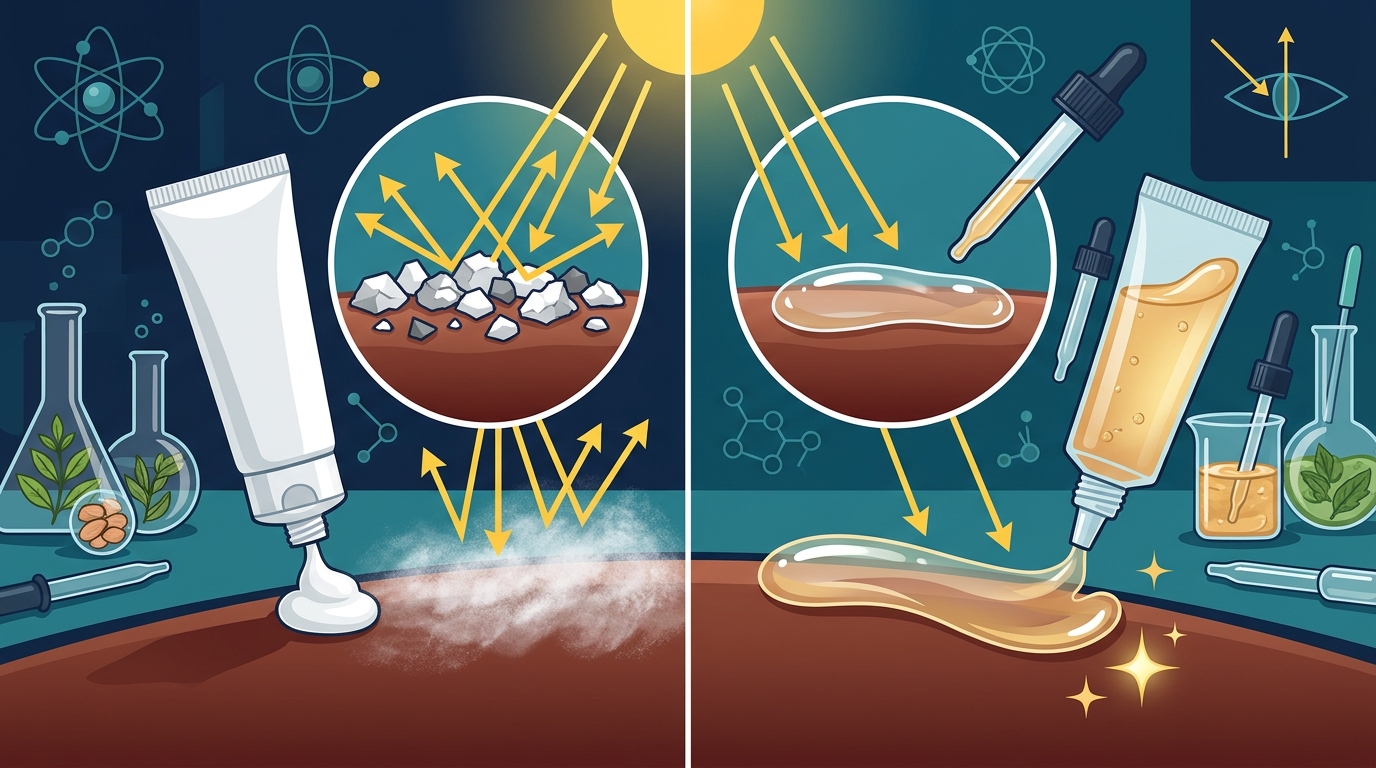
Mineral sunscreens, also known as physical sunscreens, work by sitting on the surface of the skin and reflecting ultraviolet rays. The active ingredients, typically zinc oxide and titanium dioxide, are inorganic particles that scatter light. This scattering mechanism is what provides broad-spectrum protection, but it also affects how the product looks on the skin. When these particles are large or unevenly distributed, they reflect visible light, resulting in a white or ashy cast.
The size of the particles plays a critical role in this optical effect. Larger particles scatter more visible light, leading to a more pronounced white cast. Smaller, nano-sized particles scatter less visible light but may still leave a slight sheen. Understanding this physics helps explain why some "clear" mineral sunscreens still appear white on certain skin tones, particularly those with higher melanin content.
Formulation Techniques That Reduce White Cast
Advanced formulation techniques can mitigate the white cast associated with mineral filters. One key method is the use of waterless organogels, which create a uniform lattice structure that holds sunscreen ingredients in place. This technology allows for a smoother, more even application that dries down to a clear finish. By controlling the particle size and distribution, formulators can minimize light scattering while maintaining efficacy.
Sonrei utilizes this approach in its Organoshield® technology, which creates a clear, smooth film that bonds effectively to the top of the skin. This method ensures that the sunscreen ingredients are tightly held in a uniform structure, bringing maximum efficacy with the soothing feel of a hydrating gel. The result is a product that goes on clear, dries fast, and looks great on all skin types and shades.
Impact of Skin Tone on Sunscreen Appearance
Skin tone significantly influences how sunscreen appears after application. Deeper skin tones have higher melanin levels, which can make white casts more noticeable and difficult to blend. Lighter skin tones may tolerate a slight white cast better, but it can still look unnatural or chalky. The contrast between the white particles and the skin's natural pigment is what makes the cast visible.
For individuals with melanated skin, choosing a sunscreen that is truly clear is essential for daily wear. A white cast can be a barrier to consistent sunscreen use, leading to inadequate sun protection. By selecting products specifically designed to be invisible on all skin tones, users can ensure they get the protection they need without compromising their appearance.
Choosing the Right Sunscreen for Your Skin Type
When selecting a sunscreen, consider your skin type and the specific needs of your routine. For sensitive skin, mineral sunscreens are often preferred because they are less likely to cause irritation. However, not all mineral sunscreens are created equal. Look for products that emphasize a clear finish and are tested for water resistance, as these factors can impact both appearance and longevity.
Sonrei offers a range of options to suit different needs. The Sea Clearly™ SPF 50 Gel is a translucent gel that is hydrating on the body, while the Clearly Zinq™ SPF 35 is a 100% mineral option for sensitive skin. Both products are designed to provide broad-spectrum protection without leaving a white cast. By choosing a product that aligns with your skin type and preferences, you can achieve both protection and a natural look.
Application Tips for a Seamless Finish
Proper application techniques can further reduce the appearance of a white cast. Applying sunscreen in thin, even layers allows the product to dry down more uniformly. Rubbing the sunscreen in gently can help it blend into the skin, reducing the visibility of any residual particles. Avoiding excessive amounts can also prevent a chalky buildup, especially on the face.
For best results, apply sunscreen as the last step in your morning skincare routine, before makeup. This allows the product to set and bond to the skin, creating a smooth base for any subsequent products. If you are using a mineral sunscreen, give it a few minutes to dry before applying makeup to ensure a seamless finish. These simple steps can help you achieve a natural, cast-free look throughout the day.
Key Takeaways
- Mineral sunscreens leave a white cast because they scatter visible light, not just UV rays.
- Particle size and distribution significantly impact the visibility of the white cast.
- Advanced formulation techniques, such as waterless organogels, can create a truly clear finish.
- Deeper skin tones are more susceptible to noticeable white casts from mineral filters.
- Choosing a sunscreen specifically designed for your skin tone and type is crucial for a seamless look.
- Proper application techniques, such as thin, even layers, can help reduce the appearance of a cast.
Frequently Asked Questions
Why do mineral sunscreens leave a white cast?
Mineral sunscreens leave a white cast because the active ingredients, such as zinc oxide and titanium dioxide, scatter visible light. This scattering effect is what provides sun protection, but it also results in a white or ashy appearance on the skin, especially on deeper skin tones.
Can chemical sunscreens leave a white cast?
Chemical sunscreens typically do not leave a white cast because they absorb UV rays rather than reflecting them. However, some chemical sunscreens may have a slight sheen or residue, but it is usually less noticeable than the white cast from mineral filters.
How can I tell if a sunscreen is truly clear?
To determine if a sunscreen is truly clear, check for reviews from users with similar skin tones. Look for products that emphasize a "no white cast" or "invisible" finish. Testing a small amount on your jawline or hand can also help you see how the product looks on your skin.
Does a white cast affect the effectiveness of sunscreen?
A white cast does not necessarily affect the effectiveness of sunscreen. The protection comes from the active ingredients, regardless of their appearance. However, if the white cast makes you less likely to wear sunscreen, it can indirectly impact your sun protection habits.
What is the best sunscreen for deeper skin tones?
The best sunscreen for deeper skin tones is one that is specifically formulated to be clear and invisible. Look for products that use advanced technologies to minimize light scattering, such as waterless organogels. Sonrei's Sea Clearly™ and Clearly Zinq™ lines are designed to provide broad-spectrum protection without a white cast.
How should I apply sunscreen to avoid a white cast?
Apply sunscreen in thin, even layers and rub it in gently to help it blend into the skin. Avoid using excessive amounts, as this can lead to a chalky buildup. Allow the sunscreen to dry down for a few minutes before applying makeup or other products.
Conclusion
Avoiding a white cast from clear sunscreens is about understanding the science behind mineral filters and choosing products formulated for your specific skin tone. By selecting a sunscreen that uses advanced technology to minimize light scattering, you can enjoy the benefits of broad-spectrum protection without compromising your appearance. Sonrei is committed to providing sun care that is both effective and invisible, ensuring that you can protect your skin with confidence every day. Explore the Organoshield® technology to learn more about how Sonrei achieves a clear, seamless finish. Learn more: Frequently Asked Questions Sonrei.