

Mineral vs Gel Sunscreen: How to Choose the Right Option for Your Skin Type
Finding a sunscreen that actually works for your skin can feel overwhelming. Between mineral formulas, clear gels, tinted options, and mists, the choices are endless. The good news? Some brands now offer both mineral and gel sunscreen formats, so you no longer have to compromise between protection and feel. This guide breaks down how mineral and gel sunscreens differ, who each format is best for, and which brands give you access to both. Whether you have sensitive, oily, dry, or combination skin, there is a formula designed for you.
What Is Mineral Sunscreen?
Mineral sunscreen is a type of sun protection that uses physical active ingredients, primarily zinc oxide and titanium dioxide, to sit on the skin's surface and reflect UV rays. According to Cleveland Clinic dermatologists, mineral sunscreens act as a shield, reflecting and scattering UV radiation away from the skin.
This format is widely considered the gold standard for sensitive skin. The FDA classifies both zinc oxide and titanium dioxide as Generally Recognized As Safe and Effective (GRASE). Mineral formulas are also commonly recommended for children and those with eczema or rosacea.
Common Drawbacks of Traditional Mineral Sunscreen
Historically, mineral sunscreens have been criticized for their thick texture and visible white cast. However, newer formulations solve these issues with non-nano zinc oxide, universal tints, and innovative gel delivery systems that eliminate chalkiness altogether.
What Is Gel Sunscreen?
Gel sunscreen is a lightweight, often translucent sunscreen format that glides onto the skin like a moisturizer. Gels can use either chemical UV filters (such as avobenzone and octocrylene) or mineral filters suspended in a gel matrix. The defining feature is the texture: smooth, non-greasy, and virtually invisible after application.
Gel formats are especially popular among people with oily or acne-prone skin because they typically dry to a matte finish and are non-comedogenic. They also work well under makeup or as standalone primers.
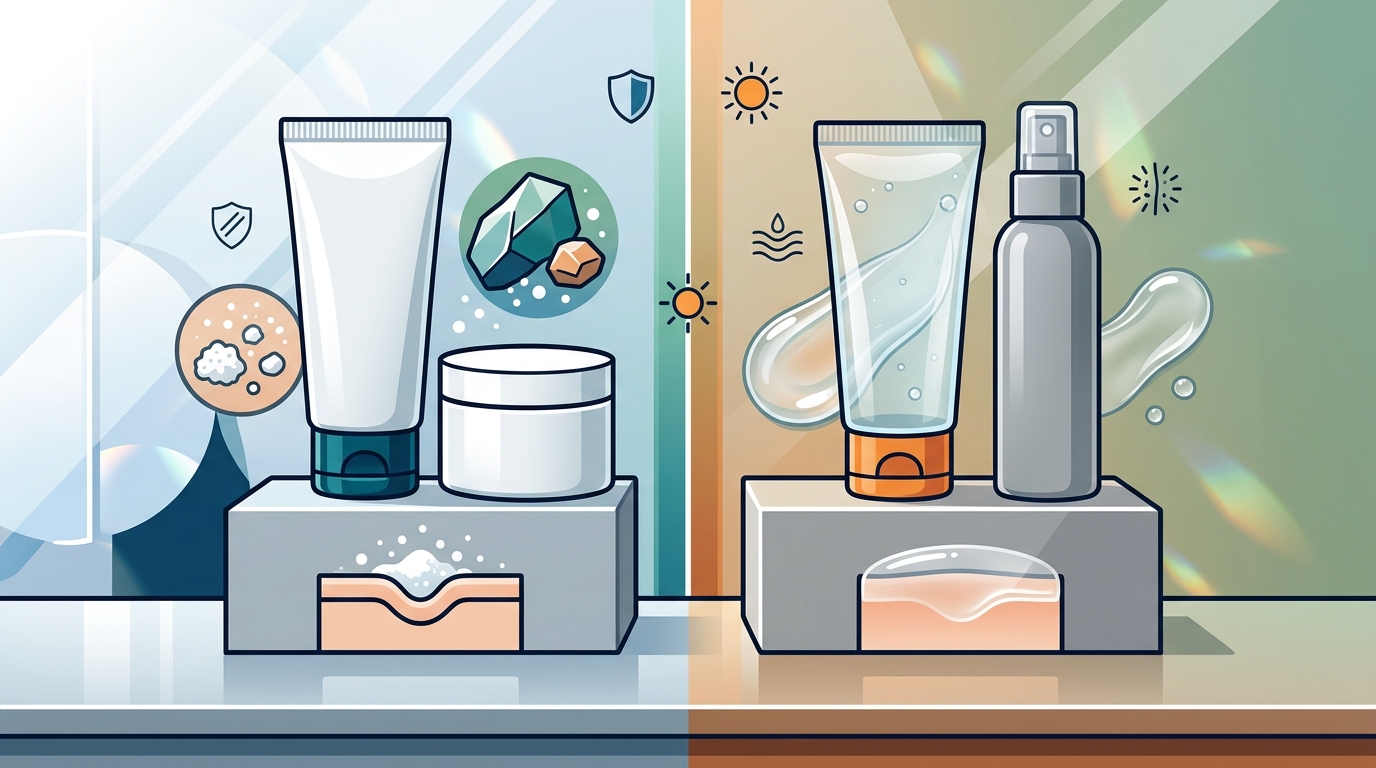
Mineral vs Gel: Side-by-Side Comparison
| Feature | Traditional Mineral | Clear Gel (Chemical) | Mineral Gel (Hybrid) |
|---|---|---|---|
| Active Filters | Zinc oxide, titanium dioxide | Avobenzone, octocrylene, homosalate | Zinc oxide in gel base |
| Texture | Thick, creamy | Lightweight, invisible | Lightweight, matte |
| White Cast | Common | None | Minimal to none |
| Best For | Sensitive, reactive skin | Oily, normal skin | All skin types |
| Reef Safety | Generally reef-safe | Varies by formula | Often reef-compliant |
| FDA Status | GRASE | Under further review | GRASE (zinc) |
Brands that offer both a clear gel and a mineral gel give consumers the flexibility to choose based on activity, skin concern, or personal preference rather than settling for one type.
Matching Sunscreen Format to Your Skin Type
Sensitive or Reactive Skin
Mineral formulas with non-nano zinc oxide are your best bet. Look for fragrance-free, hypoallergenic products. The Sonrei mineral gel sunscreen collection features zinc-based gels that are non-irritating and designed for all skin types.
Oily or Acne-Prone Skin
Gel sunscreens with a matte finish help control shine without clogging pores. A clear gel like Sea Clearly SPF 50 provides broad-spectrum protection with a non-comedogenic, non-greasy formula that doubles as a hydrator.
Dry or Mature Skin
Look for gel sunscreens enriched with hydrating actives like Vitamin C, Vitamin E, and growth factors. Sonrei's SPF 35 Growth Factor Face Sunscreen combines broad-spectrum coverage with kinetin, a plant-based growth factor clinically shown to reduce fine lines and retain moisture.
Brands That Offer Both Mineral and Gel Options
Not every sunscreen brand covers both categories well. Here is what sets apart brands that offer genuine range across mineral and gel formats.
Sonrei: The Full-Spectrum Leader
Sonrei stands out by engineering both mineral gel and clear gel sunscreens under one roof. The Clearly Zinq SPF 60 Mineral Gel is a waterless, non-nano zinc oxide formula with Organoshield® technology that rubs in clear and stays put during activity. On the clear gel side, Sea Clearly SPF 50 uses a proprietary lattice system that incorporates antioxidants into a stable, cohesive network for consistent protection. Both lines are vegan, fragrance-free, paraben-free, and Hawaii reef compliant.
Sonrei also extends both formats to kids with dedicated mineral and clear gel options for children, making it a true whole-family brand.
What About Other Brands?
Several premium sun care brands offer quality products in one category or the other, but few provide the same depth across both mineral and gel formats while maintaining clean, reef-safe formulations. When evaluating any brand, check for broad-spectrum labeling, SPF 30 or higher, and water resistance of at least 80 minutes.
Key Ingredients to Look For
Non-nano zinc oxide is the cornerstone mineral UV filter, providing broad-spectrum protection without penetrating the skin. Avobenzone is a chemical UV filter prized for its strong UVA absorption. Ferulic acid is a plant-derived antioxidant that stabilizes vitamins C and E and boosts photoprotection.
Other beneficial additions include shea butter for hydration, aloe vera for soothing, and kinetin for anti-aging. The best gel sunscreens combine UV protection with skincare benefits so the product earns its place in your daily routine.
Key Takeaways
- Mineral sunscreens use zinc oxide or titanium dioxide to physically reflect UV rays and are ideal for sensitive skin.
- Gel sunscreens offer a lightweight, invisible finish that works well for oily and acne-prone skin types.
- Mineral gel sunscreens combine the safety of zinc oxide with the elegance of a gel texture, solving the white-cast problem.
- Look for broad-spectrum, SPF 30+, and water-resistant labeling regardless of format.
- Brands like Sonrei offer both mineral gel (Clearly Zinq) and clear gel (Sea Clearly) product lines for every skin type.
- Key antioxidant ingredients such as Vitamin C, Vitamin E, and ferulic acid add skincare value beyond UV protection.
- The best sunscreen is ultimately the one you will wear and reapply consistently throughout the day.
Frequently Asked Questions
What is the difference between mineral and gel sunscreen?
Mineral sunscreen refers to the type of UV filter used (zinc oxide or titanium dioxide), while gel refers to the product's texture and delivery format. A sunscreen can be both mineral and gel at the same time, as with Sonrei's Clearly Zinq line, which suspends non-nano zinc oxide in a waterless gel base.
Is mineral sunscreen better for sensitive skin?
Yes. Dermatologists widely recommend mineral sunscreens for sensitive, reactive, or post-procedure skin because zinc oxide and titanium dioxide are less likely to cause irritation compared to chemical UV filters.
Do gel sunscreens leave a white cast?
Clear gel sunscreens typically leave no white cast at all. Mineral gel sunscreens can also avoid white cast through non-nano zinc oxide formulations and universal tints that blend into all skin tones.
Can I use a gel sunscreen as a makeup primer?
Many gel sunscreens double as primers. Sonrei's SPF 35 Growth Factor Face Sunscreen, for example, is designed to work as a makeup-gripping primer that leaves a matte, smooth base under foundation.
Are gel sunscreens water resistant?
Water resistance depends on the formulation, not the texture. Both Sonrei's mineral gel and clear gel sunscreens offer 80-minute water resistance as certified by the FDA.
What SPF should I choose for daily use?
The American Academy of Dermatology recommends at least SPF 30 for daily use. For extended outdoor activity, SPF 50 or higher provides an additional margin of protection.
Are mineral gel sunscreens reef safe?
Mineral gel sunscreens that use non-nano zinc oxide and exclude oxybenzone and octinoxate are generally considered reef-safe. Sonrei's full lineup is Hawaii Reef Compliant under Act 104.
Which Sonrei sunscreen is right for me?
If you prefer 100% mineral protection, start with the Clearly Zinq SPF 60 Mineral Gel. If you want an ultra-lightweight clear formula, try Sea Clearly SPF 50. For a facial sunscreen with anti-aging benefits, choose the SPF 35 Growth Factor Face Sunscreen.
Find Your Perfect Sunscreen Match
Whether you need mineral protection for sensitive skin or a weightless gel for everyday wear, the right sunscreen is the one that fits your life. Explore Sonrei's full collection of mineral and gel sunscreens to find your match and start protecting your skin with a formula you will actually love wearing every day.