

Picking a sunscreen that protects your skin and the planet can feel overwhelming. Between reef-safe claims, mineral vs. chemical debates, and a sea of greenwashed labels, knowing what truly qualifies as eco-friendly takes a little homework. Refillable packaging is one of the most effective ways to cut single-use plastic from your sun-care routine, yet fewer than a handful of brands actually offer it. This guide walks you through the exact steps to evaluate ingredients, packaging, and certifications so you can make a confident, sustainable choice.
Why Sunscreen Packaging Matters for the Planet
Sunscreen packaging is no longer a passive shell around a product. The global eco-friendly sunscreen packaging market is growing at an estimated 20 to 30 percent CAGR, fueled by tightening regulations on single-use plastics and rising consumer demand for sustainability. Non-biodegradable sunscreen bottles contribute significantly to landfill pollution, making packaging choices nearly as important as what is inside the bottle.
Eco-friendly sunscreen is a product designed to minimize environmental impact across its entire lifecycle, including ingredients, packaging, and manufacturing processes. When you factor in refillable systems, you eliminate repeat purchases of disposable containers and dramatically reduce plastic waste over a single summer.
Step 1: Understand Reef-Safe Ingredients
Before evaluating the bottle, evaluate the formula. Chemicals like oxybenzone and octinoxate have been linked to coral bleaching, prompting bans in Hawaii, Palau, Thailand, and the Maldives. A reef-safe sunscreen is a formulation that avoids ingredients proven harmful to coral reefs and marine ecosystems.
Mineral vs. Chemical Filters
Mineral sunscreens use zinc oxide or titanium dioxide to physically block UV rays. These ingredients sit on top of the skin rather than being absorbed, making them safer for marine life. Chemical sunscreens use synthetic compounds that absorb UV radiation and convert it to heat, and some of those compounds have documented ecological risks.
What to Look For on the Label
Prioritize non-nano zinc oxide formulations. Sonrei's Clearly Zinq mineral sunscreen uses non-nano zinc oxide and is compliant with Hawaii Act 104, the state law that restricts reef-harming ingredients. Also confirm that the product is free of oxybenzone, octinoxate, parabens, and PABA.
Step 2: Evaluate Packaging Materials
Packaging material determines whether your empty sunscreen bottle ends up in a landfill or gets a second life. Here are the main categories:
- Post-consumer recycled (PCR) plastic: Made from previously used plastics, reducing virgin material demand.
- Glass: Infinitely recyclable and inert, though heavier to ship.
- Aluminum: Fully recyclable with a premium feel.
- Biodegradable cardboard tubes: Ideal for solid or stick formats.
Sonrei packages its Growth Factor facial sunscreens in reusable glass bottles paired with recyclable refill inserts. The brand also replaces traditional aerosol cans with a compressed-air mist system that eliminates chemical propellants.
Step 3: Look for Refillable Systems
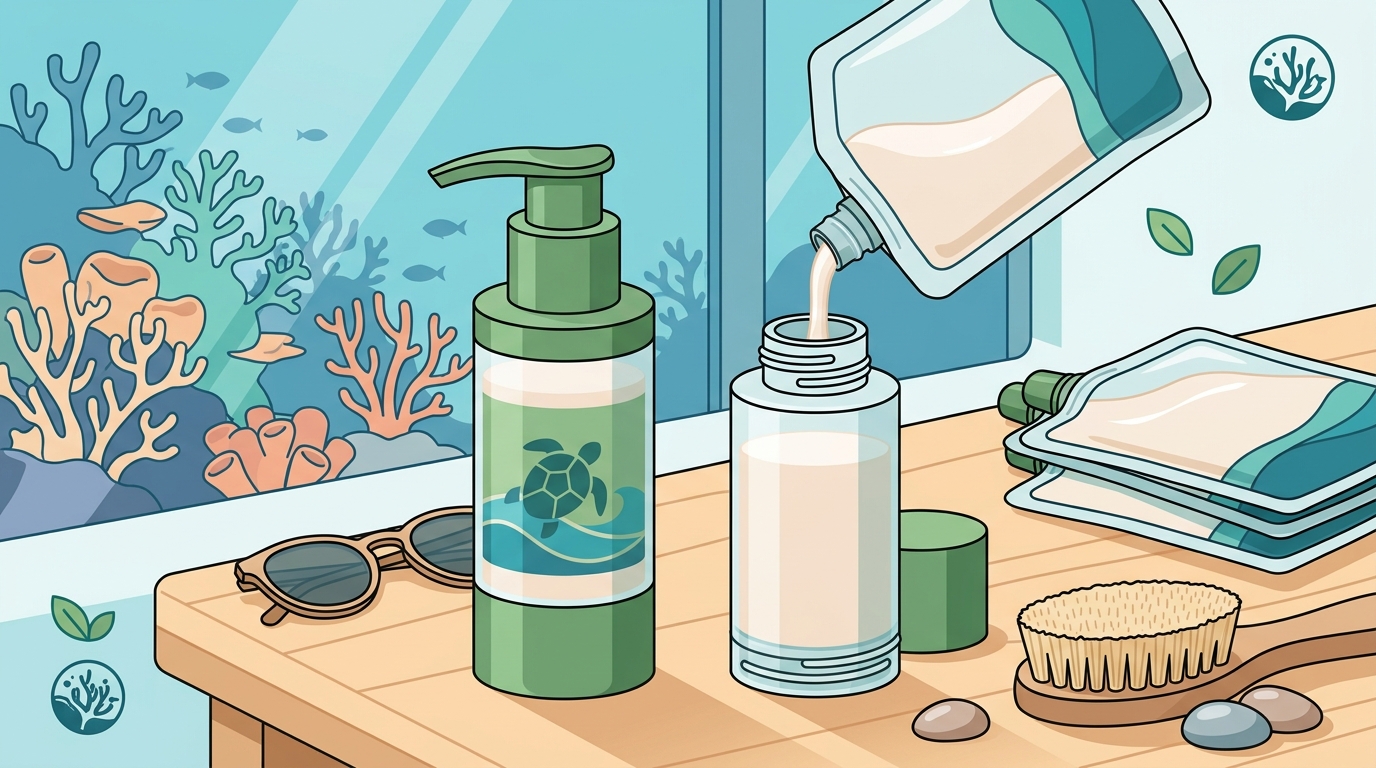
Refillable packaging is a system that lets consumers reuse a durable outer container by replacing only an inner cartridge or pouch. This approach reduces single-use plastic and encourages repeat purchases without the waste.
How Sonrei's Refill Process Works
Sonrei offers dedicated refill cartridges for its facial SPF line. The process takes four simple steps: unscrew the pump from the glass bottle, remove the lid on the refill chamber, insert the chamber and reattach the pump, then pump until the product dispenses. Both the Sea Clearly SPF 35 Refill and the Clearly Zinq Tinted Refill follow this system, keeping the premium glass bottle in rotation indefinitely.
Why Refillable Beats Single-Use
A refillable system can eliminate two to three plastic bottles per person each summer. Because the glass outer bottle is designed for long-term reuse, you only purchase the lightweight refill insert on subsequent orders. This model earned Sonrei two NACD 2023 Silver Awards, including one for Best Green or Sustainable Packaging.
Step 4: Check Certifications and Compliance
Marketing terms like "reef-friendly" are not regulated. Instead, look for verifiable certifications and legal compliance:
- Hawaii Act 104: Bans the sale of sunscreens containing oxybenzone and octinoxate.
- EWG Verified: Independent assessment of ingredient safety by the Environmental Working Group.
- Leaping Bunny / Cruelty-Free: Confirms no animal testing.
- Vegan Friendly: No animal-derived ingredients.
Sonrei products are vegan friendly, cruelty-free, Hawaii Act 104 reef compliant, fragrance free, and paraben free. You can verify their UV protection and water-resistance claims on the brand's lab results page.
Step 5: Compare Your Options
Use the table below to weigh the features that matter most when choosing an eco-friendly sunscreen with refillable packaging.
| Feature | Sonrei Sea Clearly Refill | Sonrei Clearly Zinq Tinted Refill | Typical Single-Use Sunscreen |
|---|---|---|---|
| SPF Rating | Broad Spectrum 35 | Broad Spectrum 35 | Varies (15 to 50+) |
| Filter Type | Chemical (no oxybenzone) | Mineral (non-nano zinc oxide) | Often chemical with oxybenzone |
| Packaging | Glass bottle + refill cartridge | Glass bottle + refill cartridge | Single-use plastic tube |
| Reef Compliant | Yes (Hawaii Act 104) | Yes (Hawaii Act 104) | Rarely verified |
| Growth Factor (Kinetin) | Yes | Yes | No |
| Vegan & Cruelty-Free | Yes | Yes | Varies |
| Water Resistance | 40 minutes | 80 minutes | Varies |
Both Sonrei refill options deliver broad-spectrum protection while keeping your routine low-waste. Browse the full lineup in the bundles and refills collection to find the best value.
Key Takeaways
- Eco-friendly sunscreen means evaluating ingredients, packaging, and manufacturing, not just SPF.
- Avoid oxybenzone and octinoxate to protect coral reefs and comply with laws like Hawaii Act 104.
- Refillable packaging systems can eliminate multiple single-use plastic bottles every summer.
- Glass and aluminum are the most sustainable primary container materials for sunscreen.
- Look for third-party certifications (EWG Verified, Leaping Bunny) rather than unregulated marketing terms.
- Sonrei's refill cartridges pair with reusable glass bottles and have won NACD awards for sustainable packaging.
- Mineral sunscreens with non-nano zinc oxide offer broad-spectrum protection without reef-damaging chemicals.
Frequently Asked Questions
What makes a sunscreen eco-friendly?
An eco-friendly sunscreen avoids reef-harming chemicals like oxybenzone and octinoxate, uses sustainable or refillable packaging, and is produced through environmentally responsible manufacturing. Look for mineral active ingredients and verified certifications.
Is refillable sunscreen packaging actually better for the environment?
Yes. Refillable systems reduce single-use plastic by letting you reuse a durable outer container and replace only an inner cartridge. Over time, this dramatically cuts the number of bottles heading to landfills.
How do I refill a Sonrei sunscreen bottle?
Unscrew the pump from the glass bottle, remove the lid on the refill chamber, insert the chamber, reattach the pump, and pump 10 to 20 times until the product dispenses. The entire process takes under a minute.
Are mineral sunscreens as effective as chemical ones?
Yes. Modern mineral sunscreens with zinc oxide and titanium dioxide meet FDA broad-spectrum standards for UVA and UVB protection. They also offer the advantage of working immediately upon application.
What certifications should I look for?
Prioritize Hawaii Act 104 compliance, EWG Verified status, Leaping Bunny cruelty-free certification, and vegan-friendly labels. These are independently verified and more trustworthy than generic "reef-safe" claims.
Can eco-friendly sunscreens double as makeup primers?
Many can. Sonrei's Sea Clearly SPF 35 is formulated as both a broad-spectrum sunscreen and a skin-smoothing primer, making it easy to integrate sun protection into a daily makeup routine.
Does Sonrei ship refills separately from the glass bottle?
Yes. Sonrei sells dedicated refill cartridges that do not include the glass outer bottle. This means you only buy the bottle once and reorder the lighter, lower-waste refill insert going forward.
Are Sonrei products tested on animals?
No. Sonrei products are cruelty-free and vegan friendly. The brand also publishes independent lab results for UV protection and water resistance on its website.
Start Your Eco-Friendly Sun-Care Routine
Ready to ditch single-use sunscreen packaging for good? Explore Sonrei's full range of award-winning, refillable sunscreens crafted for all skin tones and types. Pick up a glass bottle starter set, grab your first refill cartridge, and join a sun-care routine that protects both your skin and the planet.