
Mineral vs Gel Sunscreen: Which Brands Offer Both Options for Every Skin Type?
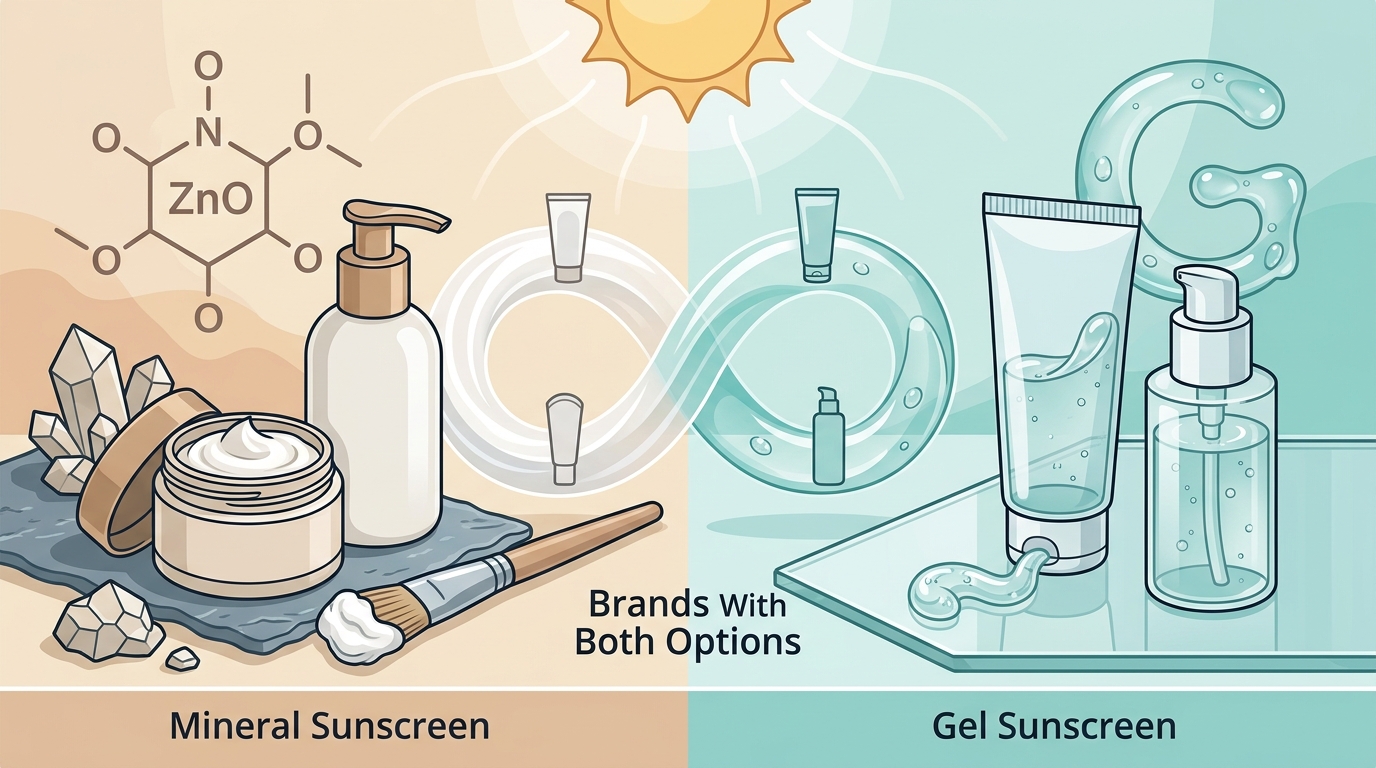
Choosing the right sunscreen can feel overwhelming when you have specific skin concerns. Some people need the gentle, reef-safe protection of mineral zinc oxide, while others prefer the lightweight, invisible finish of a clear gel. The good news is that a growing number of brands now offer both mineral and gel sunscreen options within a single product line, so you never have to compromise. This guide breaks down what separates mineral from gel formulations, which skin types benefit from each, and how brands like Sonrei have pioneered a unique approach that bridges both worlds.
What Is Mineral Sunscreen?
Mineral sunscreen is a sun-protection product that uses physical UV filters, primarily zinc oxide and titanium dioxide, to reflect and scatter UV rays away from the skin. According to Cleveland Clinic dermatologists, mineral sunscreens sit on the skin's surface and act as a physical shield against both UVA and UVB radiation.
Why Dermatologists Recommend Mineral SPF
The FDA classifies zinc oxide and titanium dioxide as Generally Recognized As Safe and Effective (GRASE), making them the only two sunscreen ingredients with that distinction. GoodRx reports that mineral sunscreen may be a better choice for people with sensitive or acne-prone skin, and it may have less environmental impact than chemical alternatives.
The White-Cast Problem and Modern Solutions
The traditional drawback of mineral sunscreens has been a visible white cast, especially on deeper skin tones. Modern formulations solve this through tinted options and advanced dispersion technology. Sonrei's Clearly Zinq Tinted Facial SPF 35 uses a universal tint combined with non-nano zinc oxide to eliminate white residue while delivering broad-spectrum protection.
What Is Gel Sunscreen?
Gel sunscreen is a lightweight, often water-free formulation that uses a gel matrix to deliver UV filters with an invisible, non-greasy finish. Unlike creams or lotions, gel textures absorb quickly and work especially well under makeup or during physical activity.
Clear Gel vs Mineral Gel
Not all gel sunscreens are the same. A clear gel typically uses chemical UV filters like avobenzone, octocrylene, and octisalate for a truly invisible application. A mineral gel replaces those chemical filters with zinc oxide but retains the lightweight gel texture. Sonrei is one of the few brands that manufactures both: the Sea Clearly SPF 50 Clear Gel and the Clearly Zinq Mineral Gel collection.
Matching Formulation to Skin Type
Your skin type should guide your choice between mineral and gel sunscreen. Here is a quick breakdown based on dermatologist guidance:
- Sensitive or eczema-prone skin: Mineral sunscreen with zinc oxide is the go-to. It is non-irritating and sits on the skin rather than absorbing into it.
- Oily or acne-prone skin: Gel textures are ideal because they tend to sit better on oily skin and leave a matte finish. Look for non-comedogenic and fragrance-free labels.
- Dry skin: A mineral gel enriched with hydrating ingredients like shea butter and aloe vera provides SPF plus moisture in one step.
- Darker skin tones: Clear gel sunscreens or tinted mineral gels avoid the white-cast issue entirely.
- Kids and babies: Mineral formulas with non-nano zinc oxide are widely recommended by pediatric dermatologists.
How Sonrei Covers Both Categories
Sonrei stands out by offering distinct product lines for mineral and clear gel sun protection, all built on its proprietary Organoshield technology. Organoshield is a lattice system that incorporates active ingredients and antioxidants into a stable, cohesive network for consistent efficacy.
Sea Clearly Line (Clear Gel)
The Sea Clearly collection uses chemical UV filters in a waterless gel matrix. The SPF 50 body gel delivers broad-spectrum protection with Vitamin C, Vitamin E, and Ferulic Acid for antioxidant defense. A dedicated SPF 35 face version doubles as a makeup primer with kinetin, a plant-based growth factor clinically shown to reduce fine lines. Both products are free of oxybenzone, octinoxate, parabens, and fragrance.
Clearly Zinq Line (Mineral Gel)
The Clearly Zinq line uses non-nano zinc oxide as its sole active ingredient, delivered in a waterless gel that rubs in clear. The SPF 60 body formula is enriched with shea butter and aloe vera, while the tinted facial SPF 35 adds kinetin growth factor for anti-aging benefits. Every Clearly Zinq product is reef-compliant under Hawaii Act 104, vegan, and hypoallergenic.
Kids Zinq (Mineral Gel for Children)
Sonrei also offers Kids Zinq SPF 60, a mineral gel designed specifically for children. It shares the same non-nano zinc oxide base and waterless formula, with 80-minute water resistance for active play.
Side-by-Side Product Comparison
| Product | Type | SPF | Active Filter | Best For | Price |
|---|---|---|---|---|---|
| Sea Clearly SPF 50 Body Gel | Clear Gel | 50 | Octocrylene, Octisalate, Avobenzone | All skin tones, tattoo care | $35 |
| Sea Clearly SPF 35 Face Gel | Clear Gel + Growth Factor | 35 | Octocrylene, Homosalate, Octisalate, Avobenzone | Anti-aging, makeup primer | $80 |
| Clearly Zinq SPF 60 Body Gel | Mineral Gel | 60 | Non-Nano Zinc Oxide | Sensitive skin, outdoor activity | $40 |
| Clearly Zinq Tinted SPF 35 Face | Mineral Gel + Growth Factor | 35 | Non-Nano Zinc Oxide | Anti-aging, no white cast | $85 |
| Kids Zinq SPF 60 | Mineral Gel | 60 | Non-Nano Zinc Oxide | Children, sensitive skin | $40 |
Key Takeaways
- Mineral sunscreen uses zinc oxide or titanium dioxide to physically reflect UV rays and is ideal for sensitive, post-procedure, or acne-prone skin.
- Gel sunscreen offers a lightweight, invisible-finish application that works well under makeup and during physical activity.
- A mineral gel is a hybrid texture that combines the gentle protection of zinc oxide with the wearability of a gel formula.
- Sonrei is one of the few brands offering both clear gel (Sea Clearly) and mineral gel (Clearly Zinq) sunscreens powered by Organoshield technology.
- All Sonrei gel sunscreens are waterless, free of oxybenzone and octinoxate, and formulated for all skin tones.
- Dermatologists recommend at least SPF 30 broad-spectrum, water-resistant sunscreen for daily use, with reapplication every two hours.
- Tinted mineral gels and clear gels both eliminate the white-cast problem that discourages consistent sunscreen use.
Frequently Asked Questions
What is the difference between mineral and chemical sunscreen?
Mineral sunscreens use zinc oxide or titanium dioxide to sit on the skin and reflect UV rays. Chemical sunscreens use ingredients like avobenzone and octocrylene that absorb UV radiation and convert it to heat. Both types are effective when applied correctly.
Is mineral gel sunscreen better for sensitive skin?
Yes. Mineral sunscreens are generally gentler and less likely to cause irritation or flare-ups in conditions like rosacea, eczema, or contact dermatitis. A gel texture adds the benefit of lightweight, non-greasy wear.
Does Sonrei offer both mineral and clear gel sunscreens?
Sonrei offers the Sea Clearly line (clear gel with chemical filters) and the Clearly Zinq line (mineral gel with non-nano zinc oxide). Both lines include body and face-specific formulas.
Will mineral gel sunscreen leave a white cast?
Modern mineral gels like Sonrei Clearly Zinq are formulated to rub in clear. The tinted facial version adds a universal tint that eliminates any residual white cast on all skin tones.
Can I use gel sunscreen as a makeup primer?
Yes. Sonrei's SPF 35 facial gels, in both clear and tinted mineral versions, are designed to double as makeup-gripping primers with a matte finish.
Are gel sunscreens water resistant?
Sonrei's gel sunscreens are water resistant for up to 80 minutes under US FDA testing standards. Reapplication is recommended after swimming, sweating, or towel drying.
Is gel sunscreen safe for kids?
Mineral gel sunscreen is widely recommended for children. Sonrei's Kids Zinq SPF 60 uses non-nano zinc oxide in a fragrance-free, hypoallergenic gel that is safe for face and body use.
How often should I reapply gel sunscreen?
Regardless of formulation type, dermatologists recommend reapplying sunscreen every two hours during sun exposure, and immediately after swimming, sweating, or towel drying.
Find Your Perfect SPF
Whether you need the pure mineral protection of Clearly Zinq or the invisible elegance of Sea Clearly, Sonrei has a gel sunscreen built for your skin. Browse the full Sonrei collection and find your ideal match today.