

According to the American Academy of Dermatology, skin cancer is the most common form of cancer in the United States, with more than 5 million cases treated each year. This statistic underscores the critical necessity of daily sun protection, regardless of weather conditions or seasonal changes. Applying sunscreen is not merely a cosmetic routine but a fundamental health practice that prevents premature aging, hyperpigmentation, and DNA damage. However, the efficacy of even the most expensive premium products diminishes significantly if applied incorrectly. Understanding the precise mechanics of application ensures that your skin receives the full SPF rating advertised on the bottle.
Preparing Your Skin for Application
Before you touch a tube of sunscreen, your skin must be in the optimal state to receive it. Premium sunscreens, particularly those from brands like Sonreiskin, are formulated to bond with the skin barrier. If your skin is excessively oily or covered in residual makeup, the sunscreen may slide off or fail to adhere properly, creating gaps in protection.
Start with a clean face. Use a gentle cleanser to remove overnight oils and impurities. For those with dry skin, applying a hydrating serum or moisturizer is essential. Sunscreen works best when applied over a slightly damp or well-hydrated base. This helps the product spread evenly without tugging at the skin. If you are using a chemical sunscreen, it is often recommended to apply it to clean, dry skin to allow the active ingredients to penetrate effectively. Conversely, mineral sunscreens can be applied over moisturizer to create a protective physical barrier.
Allow your moisturizer to fully absorb into the skin before proceeding. This typically takes about two to three minutes. Applying sunscreen over wet moisturizer can dilute the SPF concentration, reducing its effectiveness. This step is crucial for maintaining the integrity of the protective film on your skin.
The Correct Dosage and Amount
One of the most common mistakes people make is underapplying sunscreen. The standard recommendation from dermatologists is the "two-finger rule." This means you should squeeze a line of sunscreen along the index and middle fingers of one hand. This amount is approximately one milliliter, which is the exact quantity needed to cover the face and neck adequately.
Using less than this amount does not provide the labeled SPF protection. For example, using half the recommended amount might reduce an SPF 50 sunscreen to an effective SPF of only 12 or lower. This is a significant drop in protection that leaves your skin vulnerable to UVB rays. For the entire body, the recommended amount is approximately one ounce, or a shot glass full. This ensures that every square inch of skin is covered.
Premium sunscreens often have a luxurious texture that encourages generous application. Do not be afraid to use more product. The goal is to create a uniform, invisible layer that does not leave a white cast or feel greasy. If the product feels heavy, you may be using too much, but it is better to err on the side of excess than deficiency.
Order of Layering Skincare Products
The order in which you apply your skincare products determines their efficacy. The general rule is to apply products from thinnest to thickest consistency. Sunscreen is typically the final step in your morning skincare routine, acting as the sealant that locks in all previous layers.
| Step | Product Type | Purpose |
|---|---|---|
| 1 | Cleanser | Remove impurities and prep skin |
| 2 | Toner/Essence | Hydrate and balance pH |
| 3 | Serum | Target specific concerns like aging |
| 4 | Moisturizer | Lock in hydration |
| 5 | Sunscreen | Protect from UV damage |
If you wear makeup, sunscreen must go before your foundation or tinted moisturizer. Applying sunscreen over makeup is ineffective because the makeup creates a barrier that prevents the sunscreen from bonding with the skin. Furthermore, touching your face to apply sunscreen over makeup can disrupt your makeup and introduce bacteria. For those who wear makeup throughout the day, a sunscreen-infused setting spray or powder can be used for reapplication, but the initial layer must be a dedicated sunscreen product.
Technique for Even Coverage
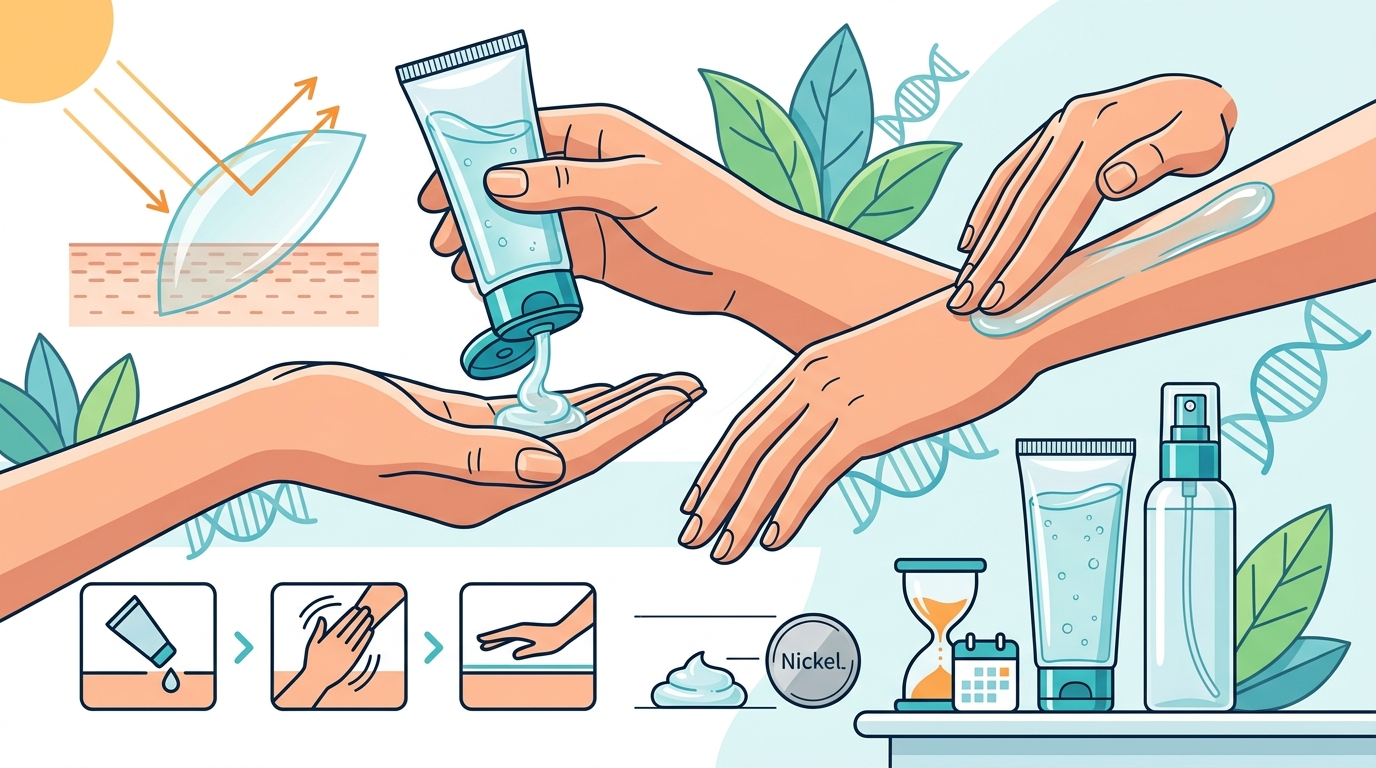
How you physically apply the sunscreen matters as much as how much you use. Dot the sunscreen across your forehead, cheeks, nose, and chin. Then, use your fingers to gently spread the product in an upward and outward motion. Avoid rubbing vigorously, as this can break down the film-forming agents in the sunscreen, reducing its longevity.
Pay special attention to often-missed areas. The ears, the back of the neck, the eyelids, and the hairline are common spots where protection is neglected. For the eyelids, use a gentle patting motion to avoid pulling the delicate skin. If you are using a mineral sunscreen, you may need to blend it more thoroughly to avoid a white cast. Premium formulas are designed to blend seamlessly, but technique still plays a role.
Allow the sunscreen to set for a few minutes before exposing yourself to the sun or applying makeup. This gives the product time to form a protective barrier on the skin. Chemical sunscreens need this time to bind with the skin, while mineral sunscreens work immediately but still benefit from setting time to ensure even distribution.
Reapplication Strategies
Even the best sunscreen degrades over time due to exposure to UV rays, sweat, and oil production. Dermatologists recommend reapplying sunscreen every two hours when you are outdoors. If you are indoors near windows, reapplication is still necessary because UVA rays can penetrate glass.
For those who wear makeup, reapplying liquid sunscreen can be challenging. In this case, consider using a sunscreen powder or spray. These products allow you to refresh your protection without disturbing your makeup. However, ensure that you are applying enough product to achieve the desired SPF level. Sprays can be particularly useful for the body, but they must be applied generously and evenly.
Consider the environment you are in. If you are swimming or sweating heavily, you need a water-resistant sunscreen and must reapply immediately after drying off. Water-resistant sunscreens are not waterproof; they maintain their SPF for 40 or 80 minutes in water. Always check the label for specific instructions on reapplication after water exposure.
Key Takeaways
- Dosage is Critical: Use the two-finger rule for the face to ensure you are getting the full SPF protection.
- Order Matters: Sunscreen is always the final step in your skincare routine, applied after moisturizer and before makeup.
- Reapplication is Non-Negotiable: Reapply every two hours during sun exposure to maintain effective protection levels.
- Missed Spots: Do not forget the ears, neck, and eyelids, which are highly susceptible to UV damage.
- Product Choice: Choose a premium sunscreen that suits your skin type, whether it be chemical or mineral, to ensure consistent daily use.
- Indoor Protection: UVA rays penetrate windows, so daily application is necessary even if you work indoors.
- Setting Time: Allow sunscreen to set for a few minutes before sun exposure to ensure the protective barrier is fully formed.
Frequently Asked Questions
Can I skip sunscreen on cloudy days?
No, you should not skip sunscreen on cloudy days. Up to 80 percent of the sun's UV rays can penetrate through clouds, causing skin damage even when it is not sunny. Consistent daily application is the only way to prevent cumulative UV damage.
How long does sunscreen last once opened?
Most sunscreens have a shelf life of about one year after opening. However, if you leave it in a hot car or direct sunlight for extended periods, the active ingredients may degrade faster. If the texture or smell changes, it is time to replace it.
Is mineral or chemical sunscreen better?
Both types are effective when used correctly. Mineral sunscreens sit on top of the skin and reflect UV rays, making them ideal for sensitive skin. Chemical sunscreens absorb into the skin and convert UV rays into heat, offering a more cosmetically elegant finish. The best choice depends on your skin type and personal preference.
Do I need sunscreen if I have dark skin?
Yes, everyone needs sunscreen regardless of skin tone. While melanin provides some natural protection, it is not sufficient to prevent skin cancer, hyperpigmentation, or premature aging. Darker skin tones are also prone to hyperpigmentation from UV exposure, making sunscreen essential for maintaining an even complexion.
How do I remove sunscreen at night?
It is important to remove sunscreen thoroughly at the end of the day. Use a gentle cleanser to wash your face. If you are wearing waterproof sunscreen, consider using a double cleansing method with an oil-based cleanser followed by a water-based cleanser to ensure all residue is removed.
Can I use sunscreen as my moisturizer?
While some sunscreens have hydrating properties, they are not a complete substitute for moisturizer. Moisturizers are designed to hydrate and repair the skin barrier, while sunscreens are designed to protect. Using a moisturizer underneath your sunscreen ensures your skin stays hydrated and healthy.
Start Your Protection Journey Today
Protecting your skin is an investment in your long-term health and appearance. By following these expert guidelines, you can ensure that your daily sunscreen routine is as effective as possible. Explore our curated collection of premium sunscreens at Sonreiskin to find the perfect product for your skin type. Visit our Sunscreen Guide for more detailed advice on choosing the right protection for your lifestyle. Take control of your skin health today and embrace the confidence that comes with knowing you are protected.