

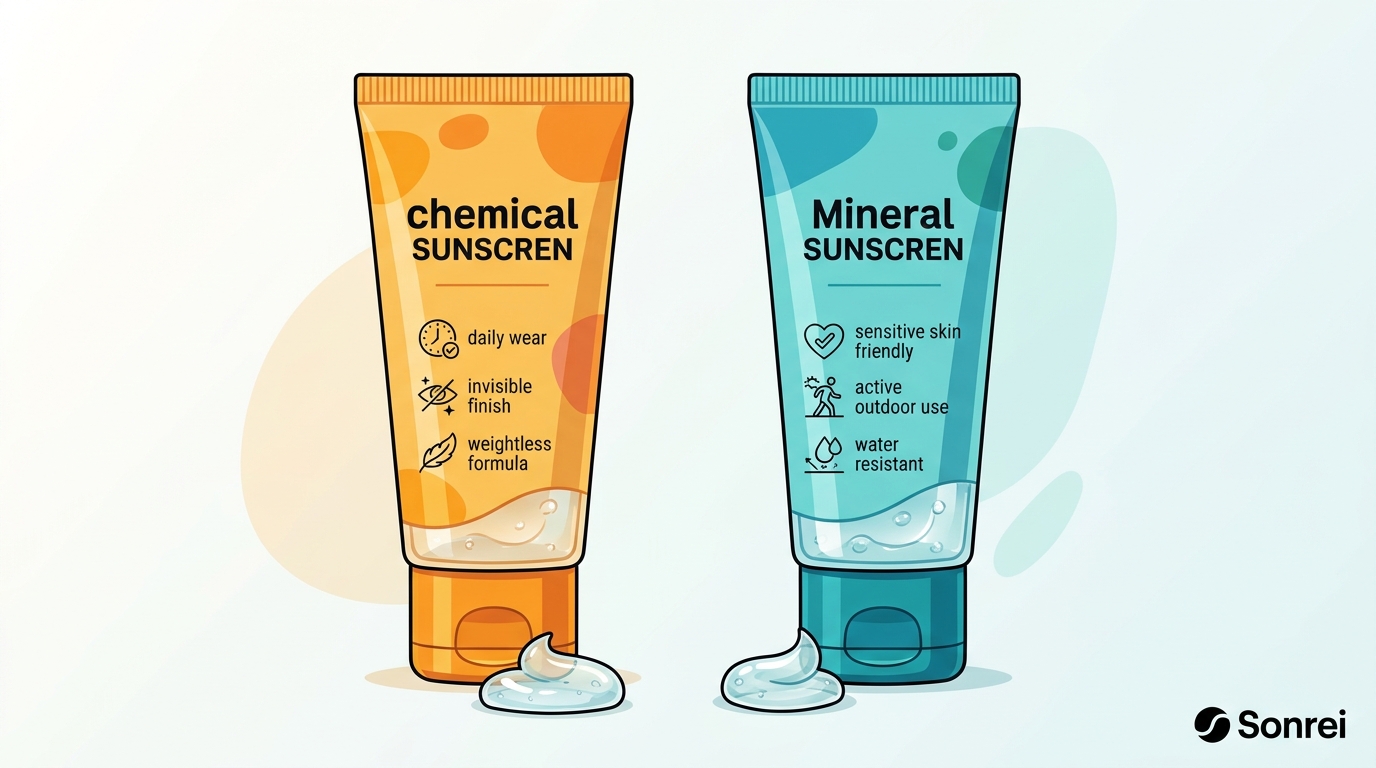
For most people, a clear chemical sunscreen works better for daily wear because it is invisible and lightweight, while a clear mineral sunscreen is often better for sensitive skin or active outdoor use. The best choice depends on your specific skin concerns, such as acne or sensitivity, and your daily activities, like swimming or working out. Sonrei formulates clear sunscreens that address these specific needs without leaving a white cast.
Understanding Clear Sunscreen Formulations
Clear sunscreen is a broad-spectrum product that absorbs into the skin without leaving a visible white residue. This is particularly important for people with deeper skin tones who often struggle with the white cast left by traditional mineral formulas. According to a survey by Mintel, 26 percent of sunscreen users said that a clear formula was a factor in their last purchase. This statistic highlights how much consumers value an invisible finish in their daily routine.
The Role of Skin Tone
Skin tone is a primary factor in choosing a clear sunscreen. For individuals with melanin-rich skin, a clear formula ensures that the product blends seamlessly into the skin. This prevents the ashy or gray appearance that can occur with opaque mineral pastes. Sonrei designs its clear gels to be skin-type agnostic, meaning they are suitable for all shades.
Matching Sunscreen to Skin Sensitivity
Skin sensitivity is a major concern for many users, and it often dictates the type of filter used. Mineral sunscreens, which use zinc oxide and titanium dioxide, are generally preferred by people with reactive or sensitive skin. These ingredients sit on the surface of the skin and are less likely to cause irritation. In contrast, chemical sunscreens absorb into the skin, which can sometimes trigger a reaction in sensitive individuals.
Acne-Prone Skin Considerations
For those with acne-prone skin, the texture of the sunscreen is just as important as the ingredients. A heavy, greasy formula can clog pores and lead to breakouts. Sonrei’s clear gels are non-comedogenic and fragrance-free, making them a safer choice for acne-prone skin. These formulas are designed to hydrate without adding excess oil to the skin.
Active Lifestyles and Water Resistance
Your lifestyle plays a significant role in determining which sunscreen will work best for you. If you spend a lot of time outdoors, especially in water or while sweating, you need a sunscreen with high water resistance. The FDA requires that water-resistant sunscreens be labeled with a specific duration, such as 80 minutes. This means the product will maintain its SPF protection for that amount of time in the water.
Sports and Outdoor Activities
For athletes and outdoor enthusiasts, a sunscreen that stays in place is essential. Sonrei’s Organoshield technology creates a waterless organogel that bonds to the skin. This ensures that the sunscreen does not run or slide off during intense physical activity. Whether you are playing pickleball or hiking, a bonded gel provides reliable protection.
Daily Wear and Makeup Compatibility
For daily wear, the sunscreen’s compatibility with makeup is a key consideration. A clear sunscreen can double as a primer, helping your foundation last longer and look smoother. This is especially useful for people who wear makeup every day. Sonrei’s facial sunscreens are designed to grip makeup, providing a flawless base for your daily look.
Anti-Aging Benefits
Some clear sunscreens also offer anti-aging benefits. Sonrei includes kinetin, a plant-based growth factor, in its facial formulas. Clinical studies have shown that kinetin can help the skin retain moisture and reduce the appearance of fine lines and wrinkles. This makes it a versatile product for those looking to protect their skin while also addressing signs of aging. according to Sunscreen recommendations for
Key Takeaways
- Clear chemical sunscreens are best for daily wear and deeper skin tones.
- Mineral sunscreens are ideal for sensitive or reactive skin.
- Water-resistant formulas are essential for active lifestyles and swimming.
- Non-comedogenic gels are better for acne-prone skin.
- Sunscreen with growth factors can provide anti-aging benefits. according to EWG s 20th
- Choosing a sunscreen that doubles as a primer saves time in your routine.
Frequently Asked Questions
What is the difference between chemical and mineral clear sunscreens?
Chemical sunscreens absorb UV rays, while mineral sunscreens reflect them. Chemical formulas are usually clearer, while mineral formulas can sometimes leave a white cast.
Is clear sunscreen good for sensitive skin?
Yes, but mineral clear sunscreens are often better for sensitive skin because they are less likely to cause irritation.
How often should I reapply clear sunscreen?
You should reapply every two hours, or immediately after swimming or sweating, even if the product is water-resistant.
Can I wear makeup over clear sunscreen?
Yes, clear sunscreens are excellent primers and help makeup last longer.
Does clear sunscreen protect against UVA and UVB rays?
Yes, if it is labeled as broad-spectrum, it protects against both UVA and UVB rays.
What is the best clear sunscreen for acne-prone skin?
Look for a non-comedogenic, fragrance-free gel that is lightweight and oil-free.